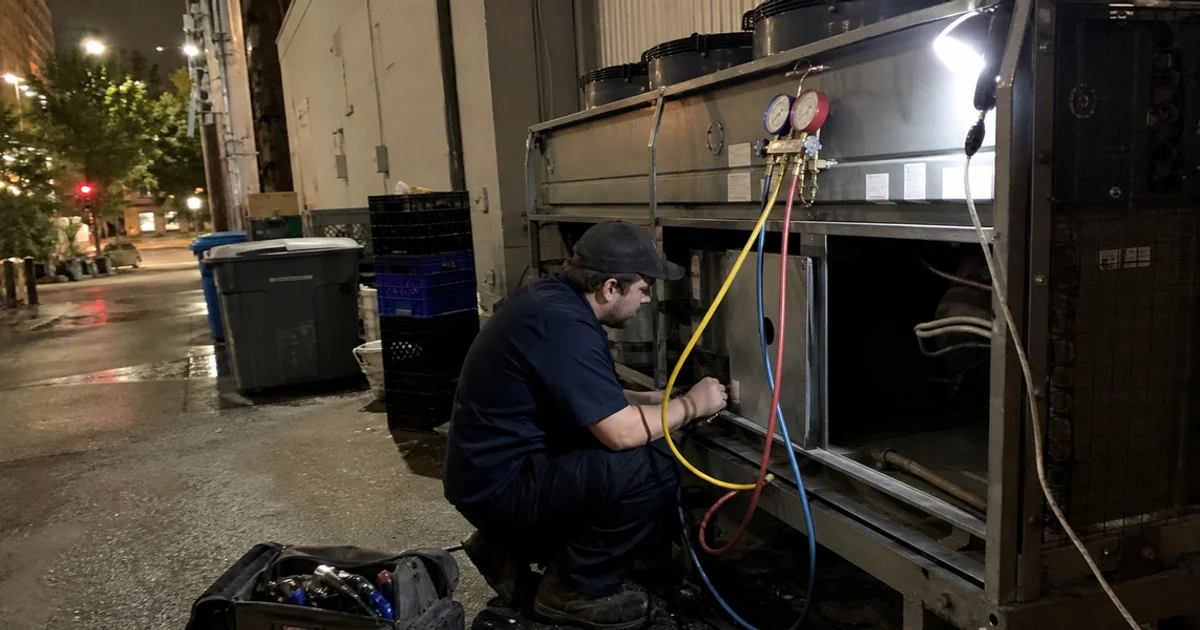
The call came in at 8:40 PM on a Saturday. A Central Eastside restaurant, mid-service, had noticed their walk-in cooler creeping up. By the time the kitchen manager called us it was reading 51°F and climbing, with a full weekend of protein, dairy, and produce inside.
This is the kind of call our emergency line exists for, and it is worth walking through what actually happened, because the sequence of decisions matters more than the repair itself.
The First Fifteen Minutes Happen on the Phone
Before we dispatched anyone, we walked the manager through three things.
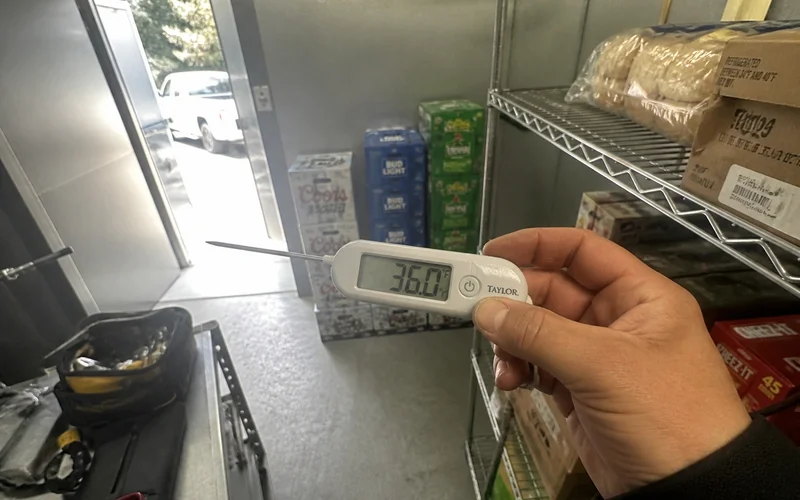
First, stop opening the door. Every open cycle during a failure dumps whatever cold is left and pulls in humid August air. Second, get a probe thermometer into the product, not just the box. Air temperature and product temperature diverge, and the food safety clock runs on product. Third, start writing down times and temperatures. If any of that inventory later has to be judged, a written log is the difference between a defensible call and a guess.
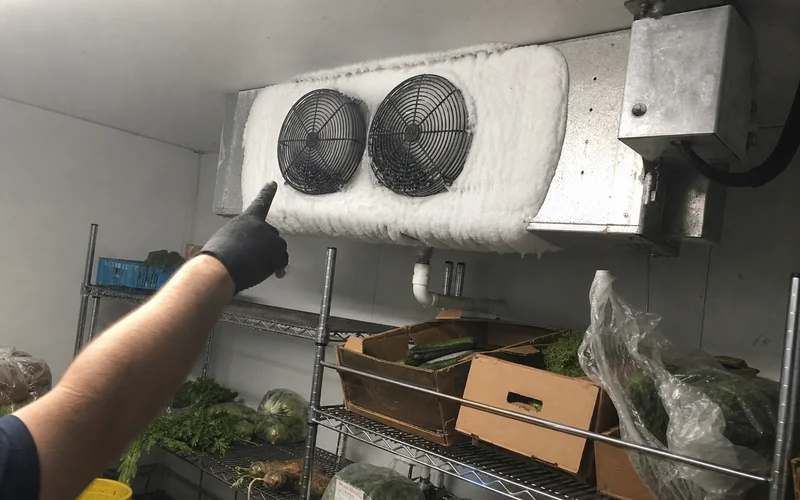
Then we asked the diagnostic question that decides the whole night: was the evaporator fan running, and was there frost on the coil?
There was. Heavy frost, according to the manager. That single detail told us this was probably not a refrigerant leak or a dead compressor, which was good news for the inventory.
What Frost on the Coil Usually Means
A walk-in that is warm with a frosted-over evaporator coil is almost always a defrost problem, not a cooling problem. The refrigeration system is working. It is working so continuously that ice has bridged across the coil fins, and once that happens, air stops moving through the coil. No airflow, no heat transfer, no cooling, even though the compressor is running its heart out.
Defrost faults come from a short list: a failed defrost heater, a defrost termination sensor that has drifted out of calibration, a failed defrost timer or control board, or a door gasket letting in so much humid air that a normal defrost cycle cannot keep up.
Why this matters at 9 PM on a Saturday
A defrost fault is repairable that night with parts most technicians carry. A failed compressor at that hour usually means a transfer plan for the product instead. Knowing which one you have, before the truck arrives, changes what the kitchen should be doing in the meantime.
We told the manager to start consolidating the most temperature-sensitive product into their reach-ins and a neighboring restaurant’s walk-in, and dispatched a technician.
On Site: Diagnosis and Repair
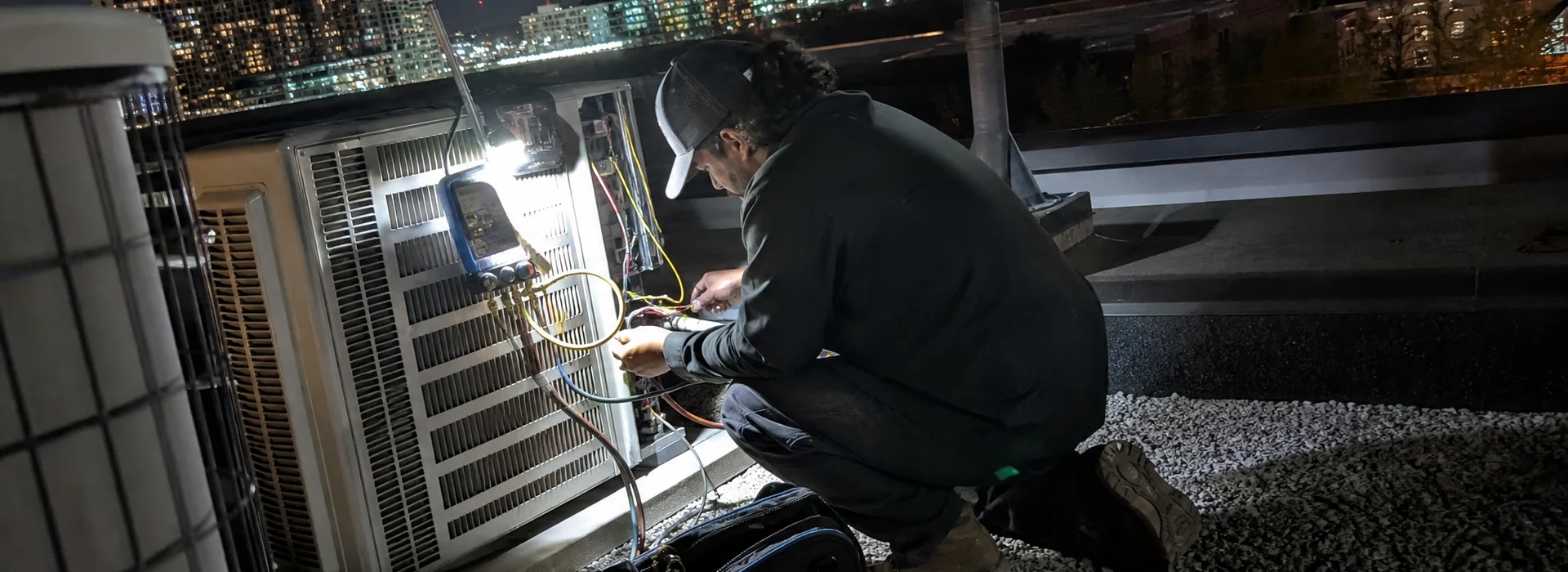
Our technician arrived a little after 9:30 PM. Confirmed heavy ice on the coil, confirmed the compressor and condenser were running normally, confirmed head pressure was reasonable. Manual defrost initiated to clear the coil, which takes time and a lot of towels.
While the coil cleared, the actual fault surfaced: the defrost termination sensor was reading roughly fifteen degrees off. The control was ending defrost cycles early, every cycle, for what had probably been weeks. Each incomplete defrost left a little more ice than the last until the coil finally bridged over and airflow stopped entirely.
The sensor was a stocked part. Replaced, control verified, defrost cycle run end to end and confirmed to terminate on temperature rather than on time.
The Numbers
| Time | Box temp | What was happening |
|---|---|---|
| 8:40 PM | 51°F | Call received, phone triage begins |
| 9:35 PM | 54°F | Technician on site, coil fully iced |
| 10:50 PM | 49°F | Coil cleared, sensor replaced |
| 12:20 AM | 41°F | Pull-down underway, product returning |
| 1:15 AM | 37°F | Holding setpoint, defrost cycle verified |
Product loss: none. The most sensitive items had been moved within the first hour, and the rest never left the safe range long enough to matter given the documented times.
What We Would Change
Honestly? This was preventable, and we said so.
The defrost sensor had been drifting for weeks. A quarterly preventive maintenance visit checks defrost termination as a matter of course, and would have caught it while it was a fifteen-minute adjustment during business hours instead of a Saturday-night emergency with a full walk-in at risk.
This restaurant was on break-fix service. They are on a maintenance agreement now, along with their reach-ins and their ice machine. It costs meaningfully less per year than one bad night.
The other lesson is about temperature monitoring. A cheap wireless probe with a phone alert would have flagged the drift hours earlier, likely mid-afternoon when the fix would have been routine. For a walk-in holding several thousand dollars of inventory, that is an easy call.
Have a walk-in drifting warm right now? Do not wait to see whether it recovers overnight. Call our dispatch line and we will walk through it with you. Read more about what we cover in commercial refrigeration repair.
About the author
Cris Camacho
Service & Administration Lead
Cris Camacho coordinates service, dispatch, and administration for Commercial Refrigeration Repair Portland Pros, keeping emergency response and project scheduling running smoothly across the Portland Metro area and SW Washington.
Commercial Refrigeration Service Coordinator, EPA Section 608 Compliance Awareness