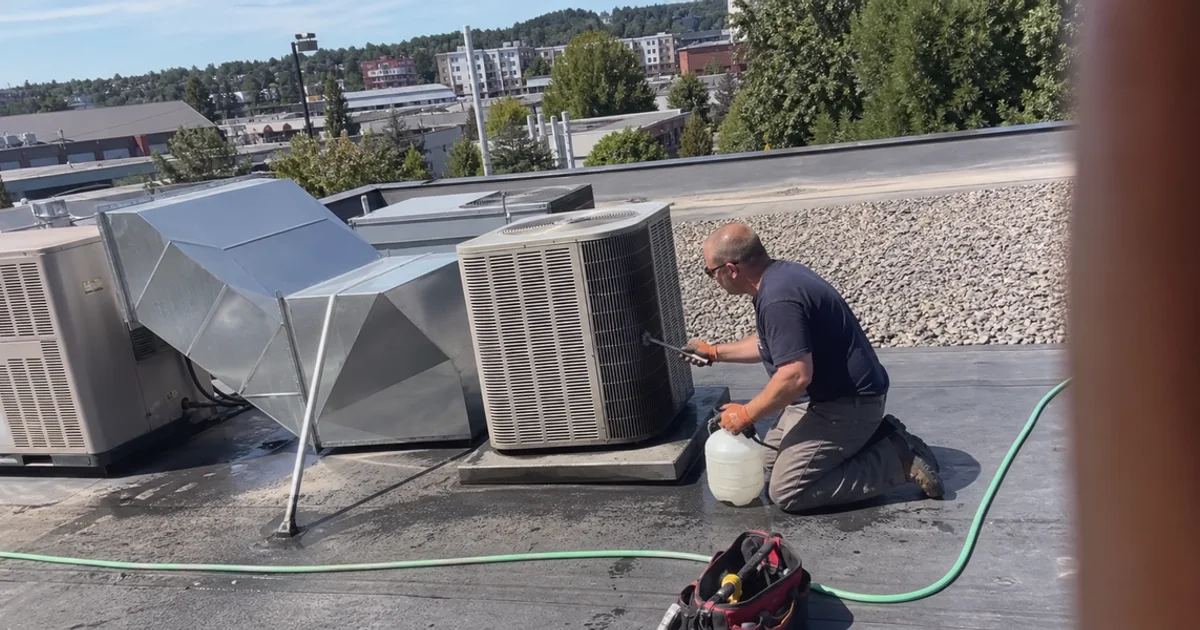
Every summer we watch the same pattern play out. Temperatures climb into the nineties, and within about seventy-two hours our emergency board fills with warm walk-ins, freezers that will not hold, and ice machines that suddenly cannot keep up with demand.
None of those units failed because of the heat. They failed because the heat removed the margin they had been running on for months.
Why Heat Exposes Problems Instead of Causing Them
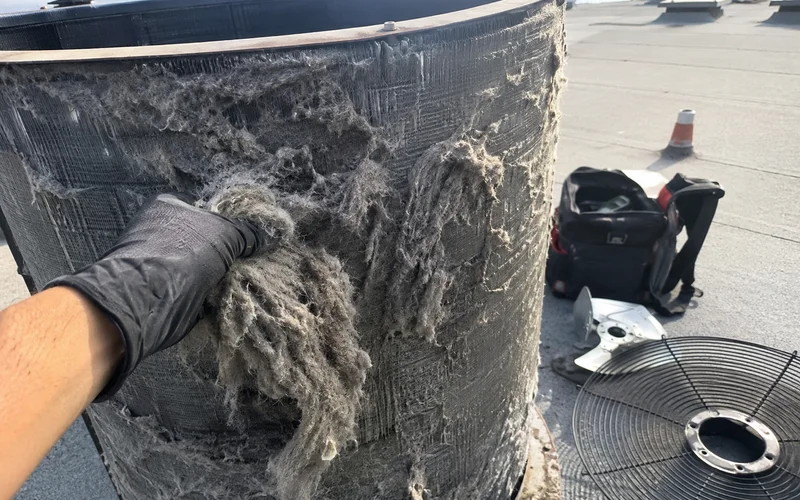
A commercial refrigeration system rejects heat through its condenser. On a mild 65°F day, a condenser that is thirty percent blocked with grease and lint still works. There is enough capacity in reserve to compensate. Head pressure runs a little high, the compressor runs a little longer, nobody notices.
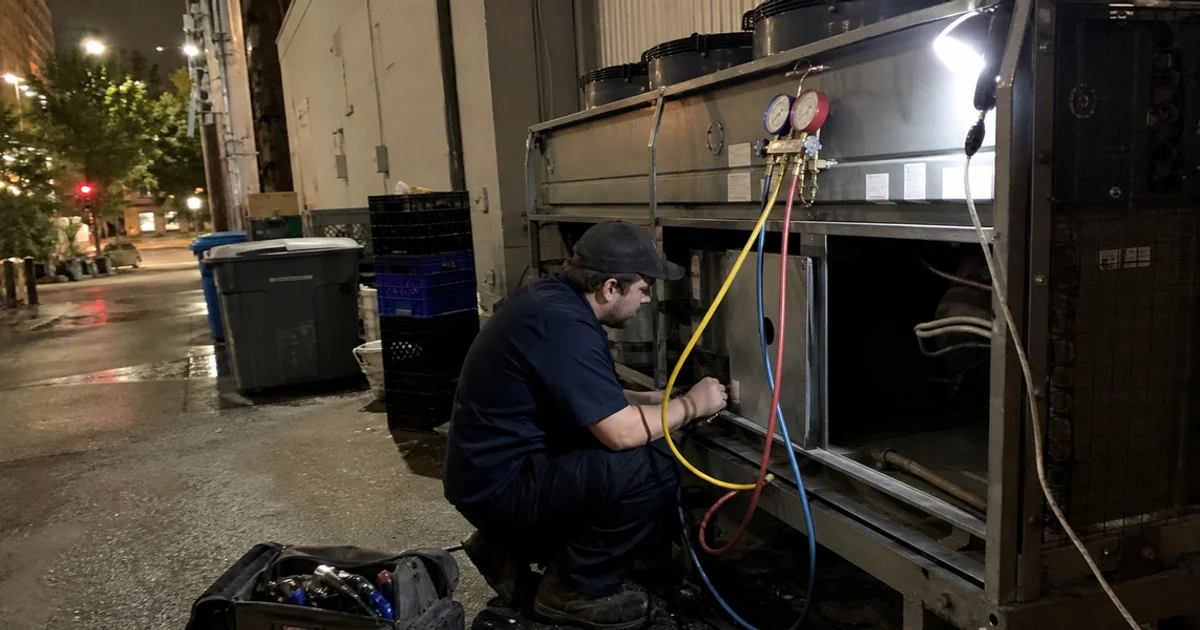
Push ambient temperature to 95°F and that reserve disappears. Head pressure climbs past what the system can manage, the compressor either trips on its high-pressure safety or runs continuously without pulling the box down, and the walk-in that held 38°F all spring is now sitting at 46°F at 4 PM every afternoon.
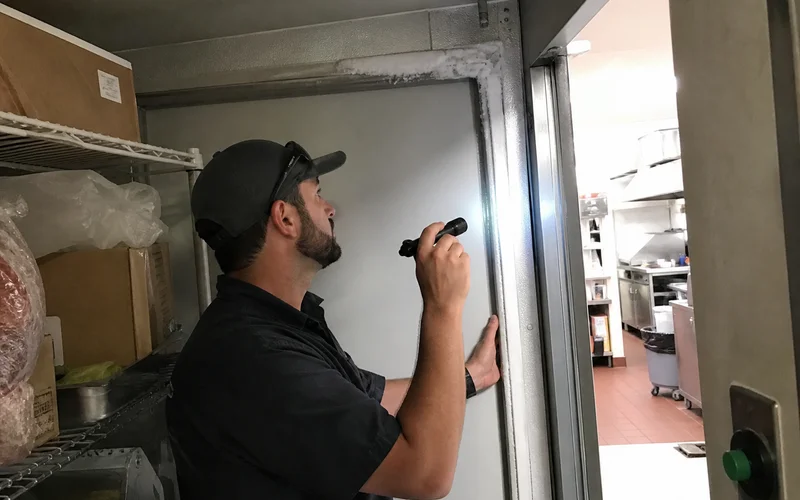
The same logic applies to door gaskets. A slightly flattened gasket leaks a little humid air year round. In July, when the kitchen is hot and the humidity is up, that same leak becomes a constant load the system cannot outrun, and the evaporator coil ices over.
What We Did Differently This Season
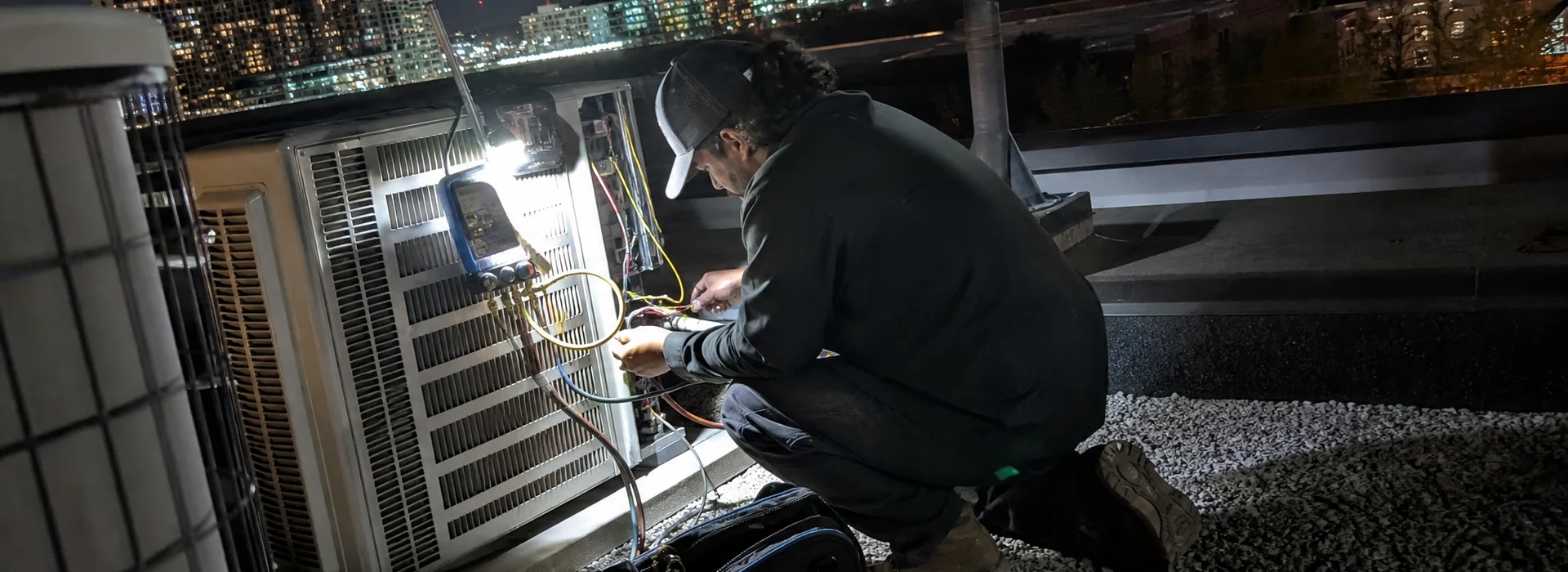
Starting in May, we front-loaded condenser cleanings for our maintenance-agreement customers instead of running them on the usual quarterly rotation. Rooftop units in Portland collect a specific seasonal cocktail: cottonwood fluff in late spring, kitchen exhaust grease year-round, and general urban dust. All three go straight into the condenser fins.
We also pushed harder than usual on three checks that pay off specifically in hot weather:
Head pressure control. Systems with condenser fan cycling or flood-back head pressure control need those controls verified before the first hot week, not after a failure.
Door gaskets and closers. A gasket that seals adequately in April will not in July. We replaced more gaskets in May and June than in the previous six months combined, deliberately.
Defrost cycle verification. Higher humidity means more moisture hitting the evaporator, which means defrost has to actually work. A marginal defrost termination sensor gets exposed fast in summer.
Practical Things Your Staff Can Do Right Now
None of these require a technician.
| Task | Frequency in summer | Why it matters |
|---|---|---|
| Check condenser is clear of debris | Weekly | Blocked airflow is the number one heat-wave failure |
| Verify walk-in doors fully latch | Daily at close | Ajar doors ice coils overnight |
| Log box temperatures | Twice daily | Drift shows up in the log before it shows up in the product |
| Keep boxes loaded, not overloaded | Ongoing | Blocked evaporator airflow starves circulation |
| Give hot product time to cool before it goes in | Every time | Warm loads spike the demand curve |
That last one gets ignored constantly. Putting a hot stockpot into a walk-in in July is asking a system that is already at its limit to absorb a large heat load all at once. Blast chillers exist precisely for this, and if your operation puts hot product into cold storage regularly, that is a conversation worth having.
The ice machine wrinkle
Ice machines get hit twice in summer: warmer ambient air makes production harder, and demand goes up at the same time. If your machine felt adequate in March and feels marginal in July, that is often scale plus a dirty condenser rather than an undersized machine. Worth checking before you buy a bigger one.
What This Season Cost the Kitchens That Skipped It
We are not going to pretend maintenance is free. But the arithmetic is not close.
A condenser cleaning and gasket check on a walk-in is a routine visit during business hours. An emergency call on a Saturday afternoon in a heat wave is after-hours labor plus parts plus, frequently, product loss. Add in the possibility of a health department conversation about holding temperatures and the gap widens further.
Our maintenance-agreement customers this June had a fraction of the emergency calls per unit that our break-fix customers did. That is not marketing. It is the whole reason preventive maintenance exists in this trade.
Heading into the back half of summer with equipment you are not confident about? Get it looked at now, while scheduling is a choice rather than an emergency. Learn more about our preventive maintenance and repair service.

About the author
Cris Camacho
Service & Administration Lead
Cris Camacho coordinates service, dispatch, and administration for Commercial Refrigeration Repair Portland Pros, keeping emergency response and project scheduling running smoothly across the Portland Metro area and SW Washington.
Commercial Refrigeration Service Coordinator, EPA Section 608 Compliance Awareness