Ice Machine Repair, Cleaning, and Filtration
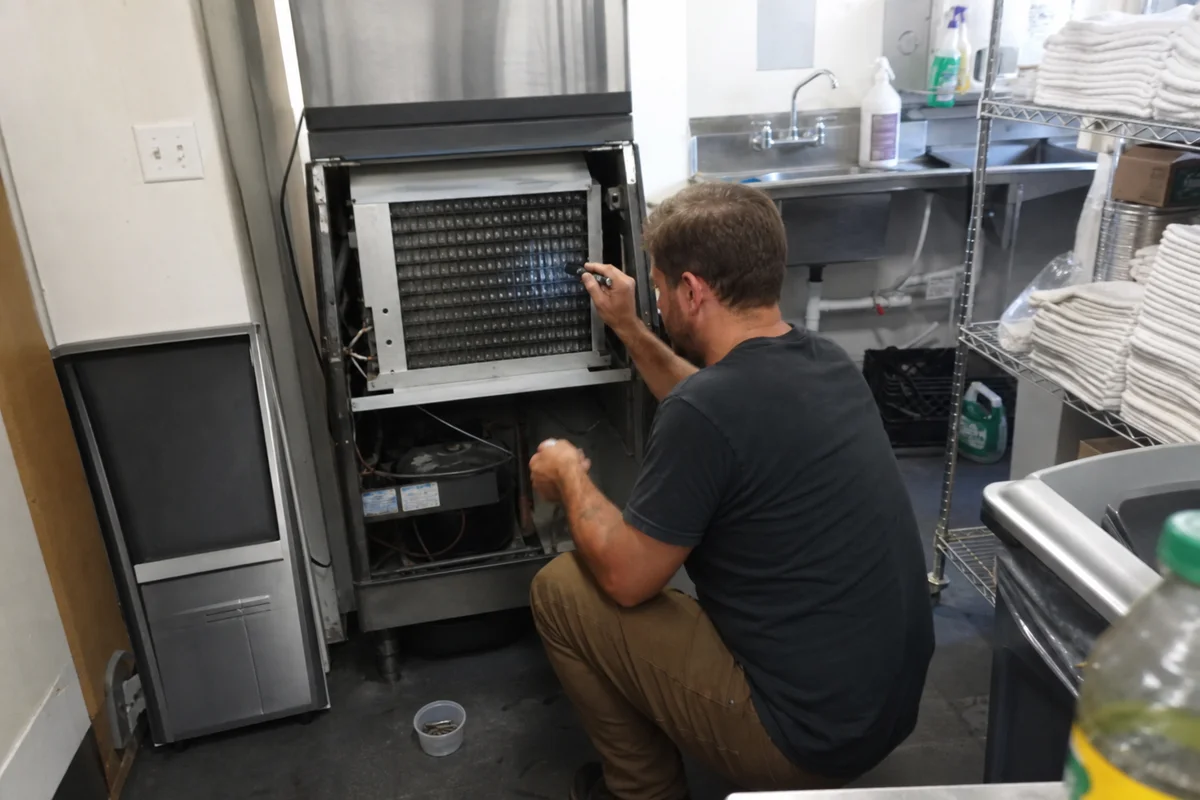
A down ice machine can shut a bar or kitchen down fast. We repair and maintain commercial ice makers from Manitowoc, Ice-O-Matic, Scotsman, and Follett, diagnosing water-inlet, scale, harvest-cycle, and condenser issues, and handling cleaning and sanitization so production and ice quality stay on spec.
How an ice machine actually fails
Ice machines have two systems that have to cooperate: a refrigeration circuit and a water path. Most failures start in the water path.
Water enters through an inlet solenoid valve, fills a sump, and gets distributed across a nickel-plated evaporator grid where it freezes into cubes. When the freeze cycle completes, a hot gas bypass valve warms the grid just enough to release the sheet, and the harvest cycle drops it into the bin. A bin level control sensor tells the machine when to stop.
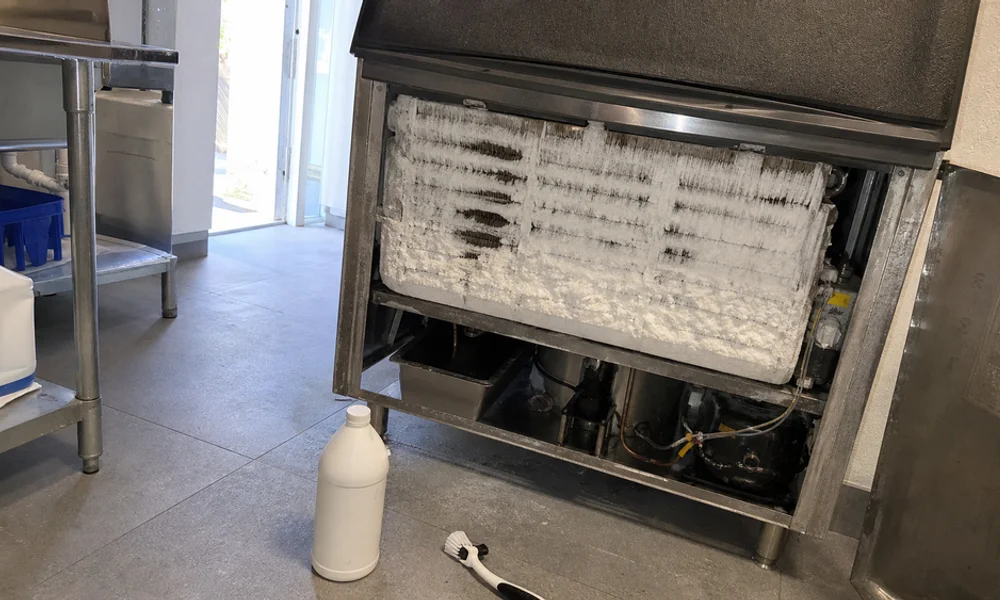
Break any link in that chain and you get a specific symptom. A failed inlet solenoid means no water and no ice. Scale on the grid means the freeze cycle cannot finish, so production falls and cubes come out soft or cloudy. A stuck harvest cycle means the machine freezes but never releases. A dirty condenser means the whole refrigeration side runs hot and production drops on warm days first.
The Portland water problem
Local water carries enough mineral content that scale deposition on the evaporator grid is the single most common cause of ice machine trouble in this area. It builds slowly, insulates the grid, and steals production a little at a time until somebody notices the bin is never full anymore.
Descaling fixes it today. Filtration is what stops it from coming back. We size the filter to your machine’s capacity and your actual water condition, not to whatever cartridge is cheapest, and we stock the common ones at our parts counter so a change is not a special order.
Filters generally need replacing every six months, sooner in high-volume or hard-water settings. A spent cartridge is worse than none, because it stops protecting the machine while everyone assumes it still is.
Cleaning and sanitization
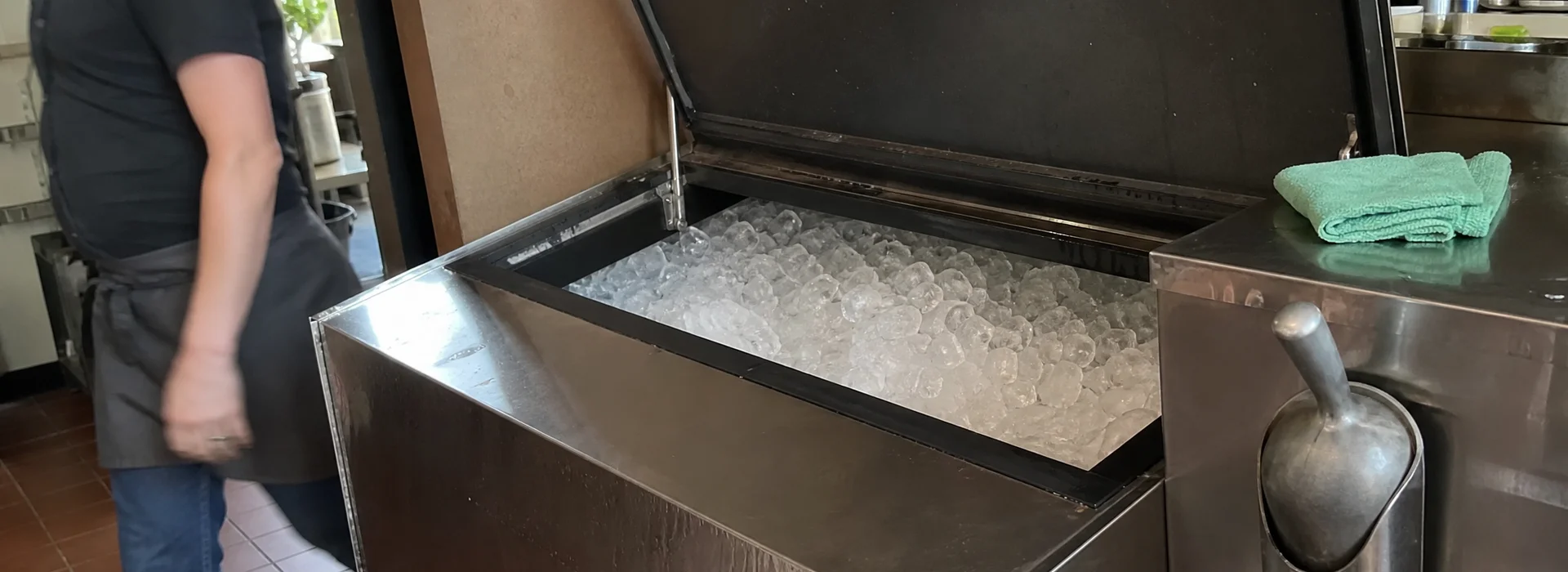
Ice is a food product, and health inspectors treat it that way. A proper service includes stripping scale from the grid and water path, running a sanitization cycle, cleaning the bin, checking the condenser and airflow, and verifying production against the machine’s rating. We document what was done so you have it on file.
Manufacturers generally specify cleaning at least twice a year. In a busy bar or a hard-water site, quarterly is more realistic. Putting that on a maintenance agreement means it actually happens on schedule instead of when the ice starts tasting off.
For warranty-covered machines, see our factory authorized warranty service page, or send us the model and serial and we will verify coverage before we dispatch.
What's Included
- Repair for Manitowoc, Ice-O-Matic, Scotsman, and Follett
- Water inlet, harvest-cycle, and condenser diagnostics
- Scale and Portland-water hardness remediation
- Cleaning and sanitization to health-code standards
- Factory-authorized warranty handling