
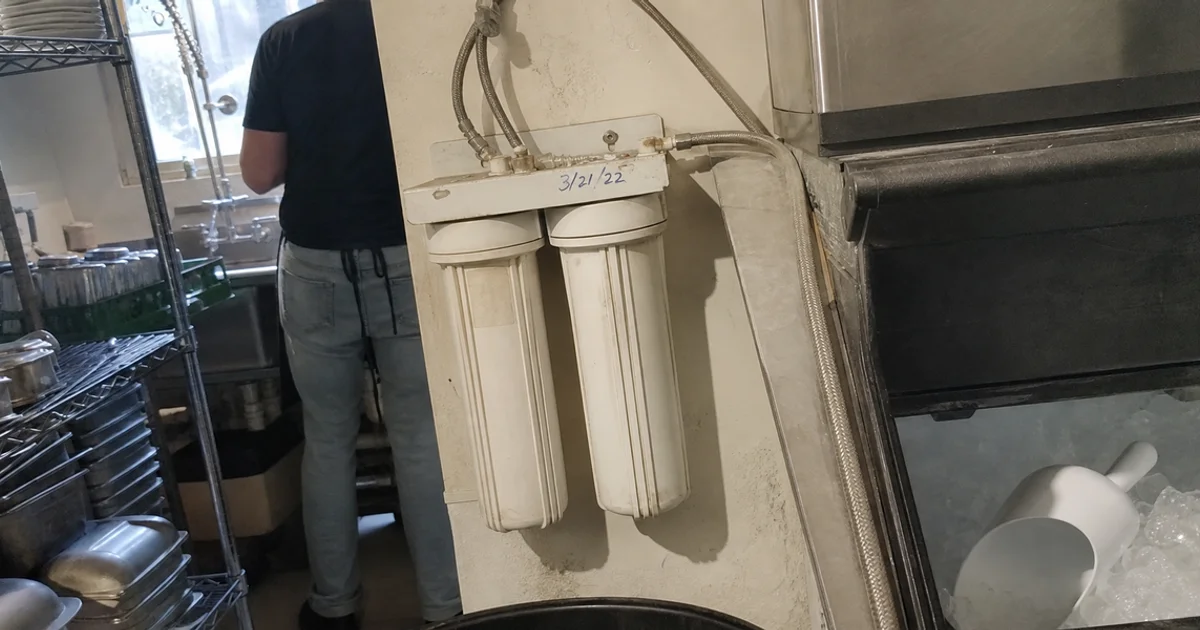
Why Ice Machines Are Uniquely Sensitive
Water hardness affects lots of equipment, but ice machines suffer disproportionately, and it comes down to how they work.
An ice machine cycles water continuously across a cold nickel-plated evaporator grid. Pure water freezes first, leaving dissolved minerals behind in the remaining water, which becomes progressively more concentrated. Those minerals deposit on the grid.
That is not a fault, it is physics. Every ice machine everywhere does this. The variable is how fast, which depends on your water’s mineral content and how many cycles the machine runs.
In the Portland area, water carries enough dissolved mineral content that scale accumulates steadily on unfiltered machines. Combine that with a high-volume bar or restaurant machine running long duty cycles through summer, and deposits build fast enough to cost you real production within a season. It is the single most common cause behind our commercial ice machine repair calls in the Metro.
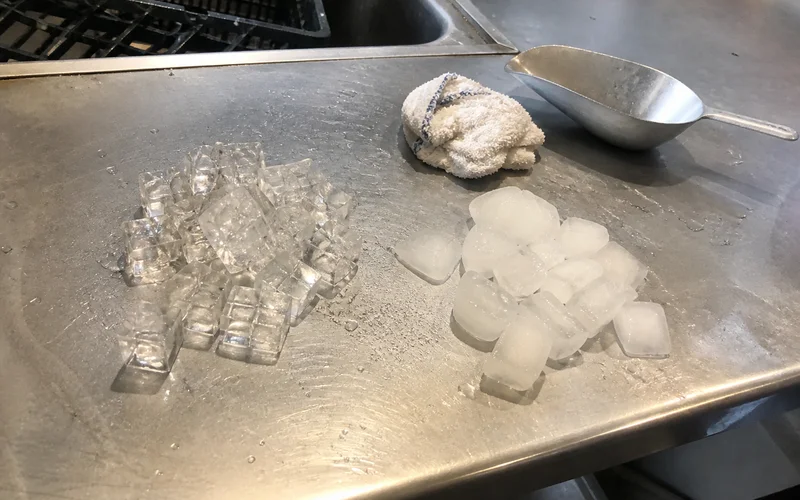
How Scale Costs You, In Order
Ice quality first. Before production drops, cubes get cloudy and soft. This is the earliest visible signal and it is almost always dismissed.
Then production. The scale layer insulates the grid, so the freeze cycle cannot complete in its allotted time. The machine produces less ice per cycle.
Then reliability. The machine works harder for less output, running longer duty cycles and stressing components. Harvest cycles become inconsistent.
Then failure. Production drops to the point where the machine cannot keep up with demand, or stops harvesting cleanly at all.
Throughout, energy cost. A scaled machine uses more electricity per pound of ice from the moment deposits begin.
What Filtration Actually Does
| Filter function | What it addresses |
|---|---|
| Scale inhibition | Sequesters minerals so they stay in solution rather than depositing |
| Sediment filtration | Particulates that foul valves and lines |
| Chlorine taste and odor reduction | Ice flavor, and protection for some components |
| Combination cartridges | Two or three of the above in one housing |
Most commercial ice machine filtration uses a combination cartridge sized to the machine’s production capacity. The critical word is sized: a cartridge rated for a smaller machine will exhaust long before its nominal interval on a high-production unit, and nobody will notice until scale reappears.
Our guide on choosing the right filter for your ice machine covers the sizing question specifically.
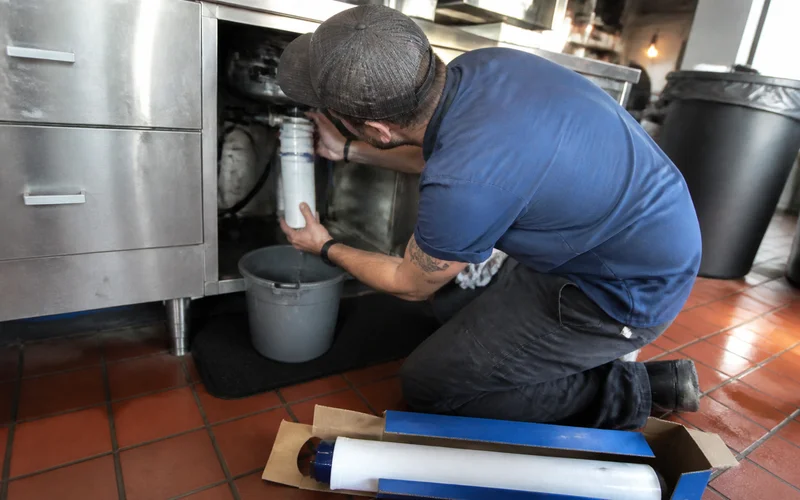
Change Intervals That Reflect Reality
Six months is the common default and a reasonable starting point. Adjust from there:
More often if your machine runs at or near capacity, if you are in a high-volume bar, or if you have previously had scale problems.
On schedule regardless even if the ice still looks fine, because a cartridge that has exhausted its capacity gives no visible warning. It simply stops working while looking identical.
Put it on a calendar, not a memory
Filter changes are the single most commonly forgotten piece of ice machine maintenance, because nothing breaks when you skip one. Nothing breaks for months. Then the grid is scaled and you are paying for a descale plus a filter instead of just a filter. A maintenance agreement tracks this so nobody has to remember.
Fixing an Already-Scaled Machine
Filtration prevents new scale. It does not remove existing deposits. A machine that has been running unfiltered needs professional descaling first, using the correct chemicals and a proper rinse and sanitization cycle afterward, since this is a food-contact system.
Then install correctly sized filtration and set a change interval. Skipping either half is why operators end up descaling the same machine repeatedly and concluding the machine is bad. Usually the machine is fine. The water was never addressed.
Scale Affects More Than the Ice Machine
Ice machines show the problem first because they cycle water across a cold surface continuously, but they are not the only equipment affected.
Steam and combi ovens scale internally, losing efficiency and eventually failing on the boiler side. Most manufacturers require treated water and will decline warranty claims without it.
Coffee and espresso equipment is notoriously sensitive, and scale there affects flavour before it affects function.
Dishwashers develop scale on heating elements and leave spotting on glassware.
Water-cooled refrigeration condensers scale on the water side exactly as an evaporator grid does, quietly reducing capacity.
If you are addressing filtration for the ice machine, it is worth asking what else in the kitchen is running on untreated water. Sometimes a single treated supply line serving several appliances is the more sensible arrangement.
What to Do If Ice Quality Has Already Changed
Cloudy, soft, or fast-melting ice means scale is established, not approaching. The sequence from here is straightforward.
Get the machine professionally descaled and sanitized, since the water path and evaporator grid both need addressing and the sanitization step matters because this is a food-contact system.
Then size and install correct filtration, matched to the machine’s production rating and your water condition, so the problem does not simply restart.
Then set a change interval and put it somewhere it will be honoured. That third step is the one operators skip, and it is why the same machine gets descaled repeatedly.