
The Choice in One Sentence
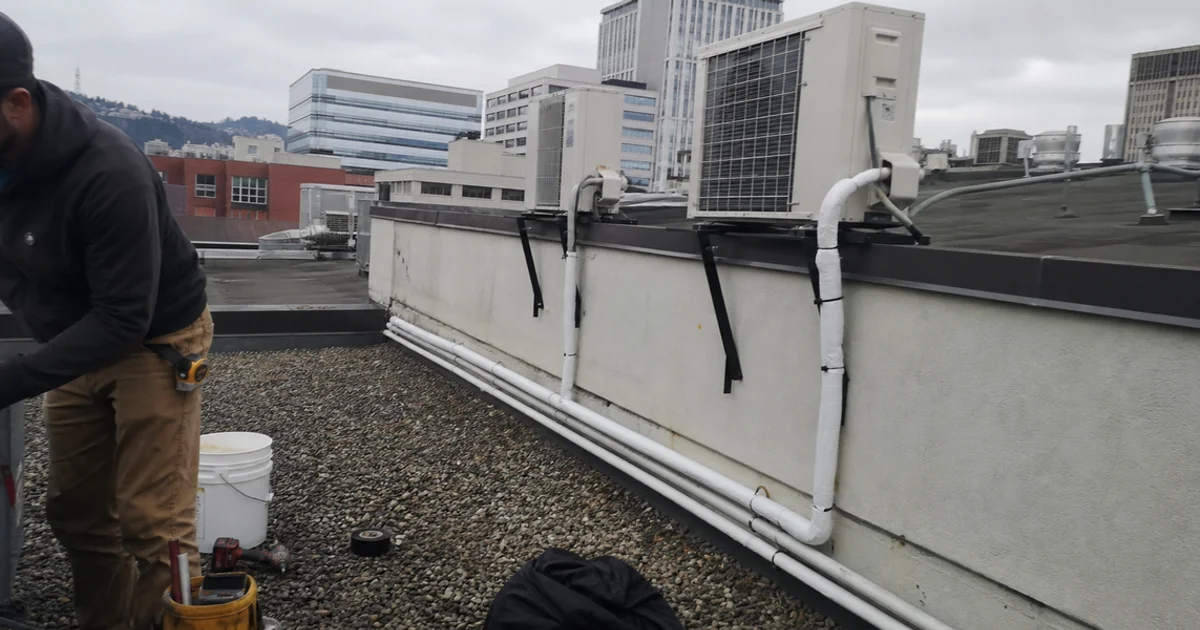
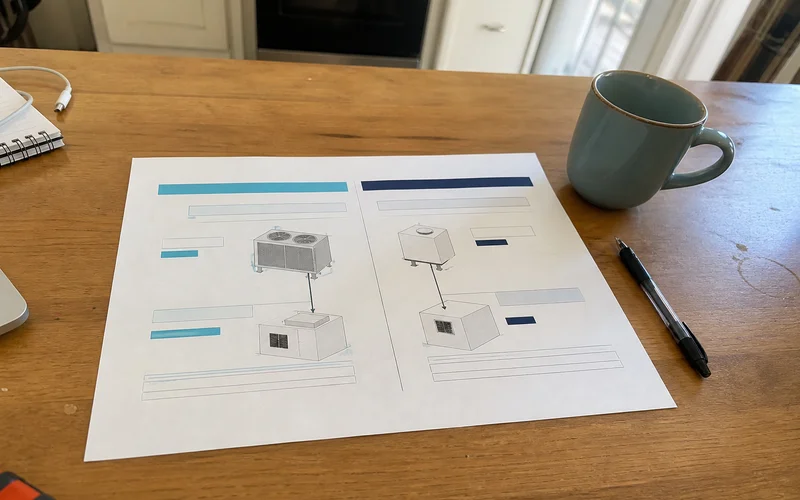
A self-contained condensing unit keeps everything at the box and rejects its heat into the room. A remote condensing unit moves the compressor and condenser outside and connects back through insulated refrigerant lines.
Everything else, cost, noise, energy, maintenance, follows from that one difference. Every refrigeration construction project we quote in a Portland kitchen includes this decision, and in dense urban spaces it usually decides itself.
Heat: The Factor That Decides Most Urban Kitchens
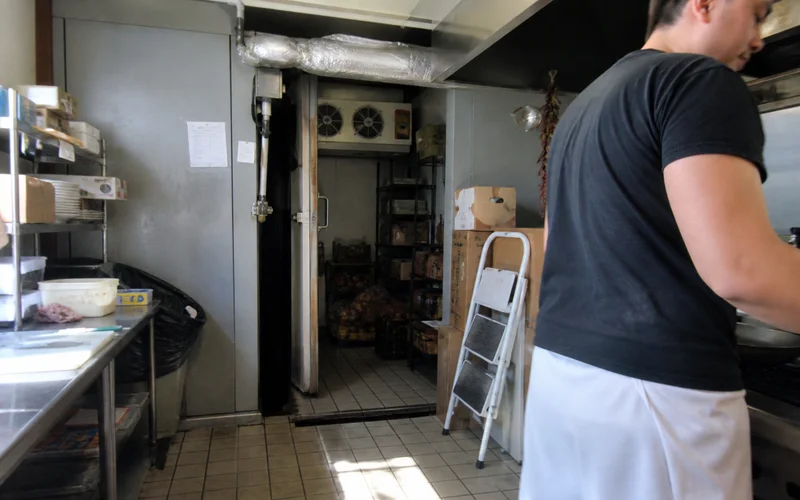
Refrigeration works by moving heat out of the box and rejecting it somewhere else. With a self-contained unit, “somewhere else” is your kitchen.
That heat does not disappear. Your HVAC system now has to remove it, which means you are paying twice: once to move the heat out of the walk-in, and again to move it out of the building. In a small back-of-house with limited ventilation, it also makes an already hot workspace worse for the people in it.
Remote condensing rejects that heat outdoors where it belongs. In a Portland summer, in a kitchen that is already running hot line equipment, this is frequently the entire argument.
The Full Comparison
| Factor | Self-contained | Remote |
|---|---|---|
| Install cost | Lower | Higher, line runs and siting |
| Heat into kitchen | Yes, significant | No |
| Noise in kitchen | Yes | No |
| Floor or ceiling space used | Yes | Frees it up |
| HVAC load added | Yes | No |
| Condenser fouling rate | Faster, kitchen grease and dust | Slower, but weather exposed |
| Maintenance access | Easy, at the box | Roof or pad access needed |
| Efficiency in hot kitchens | Lower, hot ambient air | Better, outdoor air |
| Suits multiple boxes | Poorly | Well, can serve several evaporators |
Where Each One Actually Wins
Self-contained makes sense when: the space is large and well ventilated, roof access is impractical or prohibited by the landlord, the box is small, the budget is genuinely tight, or the installation is temporary.
Remote makes sense when: the kitchen is small or already hot, noise matters because of an open kitchen or nearby dining, you are serving multiple boxes, the building supports roof siting, or you are building something you intend to keep for a decade or more.
In the Central Eastside, the Pearl, and downtown Portland, where kitchens are compact and buildings are converted, remote wins most of the time. In a suburban facility with a large, well-ventilated back-of-house and no roof access, self-contained is often perfectly reasonable.
The landlord conversation
Remote siting means putting equipment on someone’s roof or exterior wall, running lines through the building, and having ongoing access for maintenance. In a leased space, get that written into the lease rather than assumed. Discovering after signing that roof penetrations are prohibited is a genuinely bad day.
What Remote Actually Requires
Longer refrigerant line runs, properly sized and properly insulated. Line length affects performance, so a run that is too long for the equipment causes real problems rather than theoretical ones.
Roof or pad siting with adequate structural support, clearance for airflow, and safe access for technicians. Weather protection matters more than people expect in a wet climate.
Electrical run to the unit location, which sometimes means panel work.
None of that is exotic, but it is all work, and it is why the install quote is higher. What you get back is a quieter, cooler kitchen and a system that is not fighting a hot ambient environment every summer afternoon.
For how this choice fits into overall project budgeting, see our guide on commercial refrigeration build-out cost.
Line Runs Are the Detail That Decides Remote Installs
Everything that makes a remote install more expensive comes back to the refrigerant lines, and getting them right is not optional.
Length affects capacity. Every system has a maximum equivalent line length, and exceeding it costs performance. Long horizontal runs, multiple bends, and vertical rise all count toward that limit differently. A run that looks reasonable on a floor plan can be well past spec once elevation and fittings are counted.
Sizing matters in both directions. Undersized suction line restricts flow. Oversized liquid line causes its own problems with oil return. Line sizing is calculated against the specific run rather than picked from a default.
Insulation is not optional. Uninsulated suction line gains heat in transit, which costs capacity and produces condensation that drips through the building.
Oil return has to work. On vertical rises, the system needs to carry oil back to the compressor, which affects how the line is configured.
None of this is exotic for a contractor who does remote installs regularly. All of it is why remote quotes are higher and why a cheap remote install is a warning sign rather than a bargain.
Getting the Landlord Question Settled Early
If you lease, remote condensing means roof or exterior wall equipment, penetrations through the building, and ongoing technician access.
Get all three written into the lease before you commit to the configuration. Finding out after signing that roof penetrations are prohibited, or that access requires scheduling with a property manager who is not always available, turns every future service call into a negotiation.
Tell us the building and the constraints and we will spec accordingly.