
When Relocation Makes Sense
Three situations make relocating an existing walk-in the right call.
A remodel that moves the box across the room. The panels and door are fine, the refrigeration is fine, the new footprint just sits somewhere else. This is the clearest case and usually the cheapest option by a wide margin.
A move to a new address with a sound box. If you are relocating the operation and the walk-in has years of life left, taking it with you often beats buying new, provided the destination can accommodate it.
Acquiring a used box. Buying someone else’s walk-in and having it moved and reassembled can be very good value, but only after an honest condition assessment.
The situation where relocation does not make sense is a tired box. Panels with damaged vapor barriers, waterlogged insulation, cam-locks that no longer pull tight, or a door frame out of square are all reasons to put the money toward new panels instead. Our refrigeration construction team assesses condition before quoting reuse specifically so you are not paying to move a problem. If the comparison is close, commercial refrigeration build-out cost gives you the new-build figure to weigh the relocation against.
How the Work Actually Goes
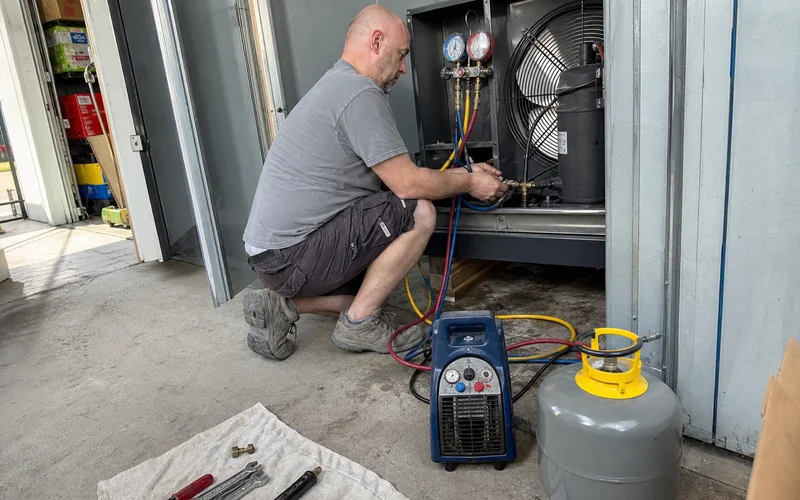
Refrigerant recovery first. Before anything is disconnected, an EPA Section 608 certified technician recovers the refrigerant charge. Venting is prohibited, and this step is not skippable regardless of schedule pressure.
System disconnection. Electrical disconnect, refrigerant line separation and capping, drain line disconnection, and controls documented so the reassembly matches.
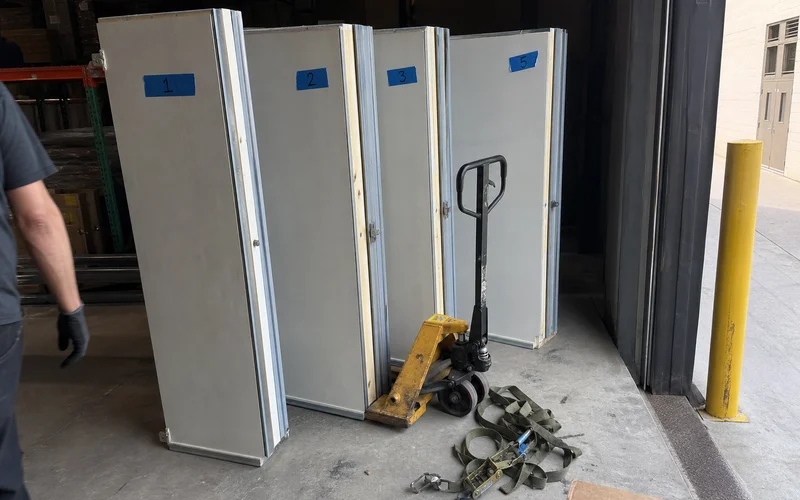
Panel labeling. Every panel gets numbered and its position recorded before removal. Walk-in panels are not interchangeable, particularly corner panels, door panels, and any that carry penetrations for lines or drains. Reassembling an unlabeled box is a slow, frustrating exercise in trial and error.
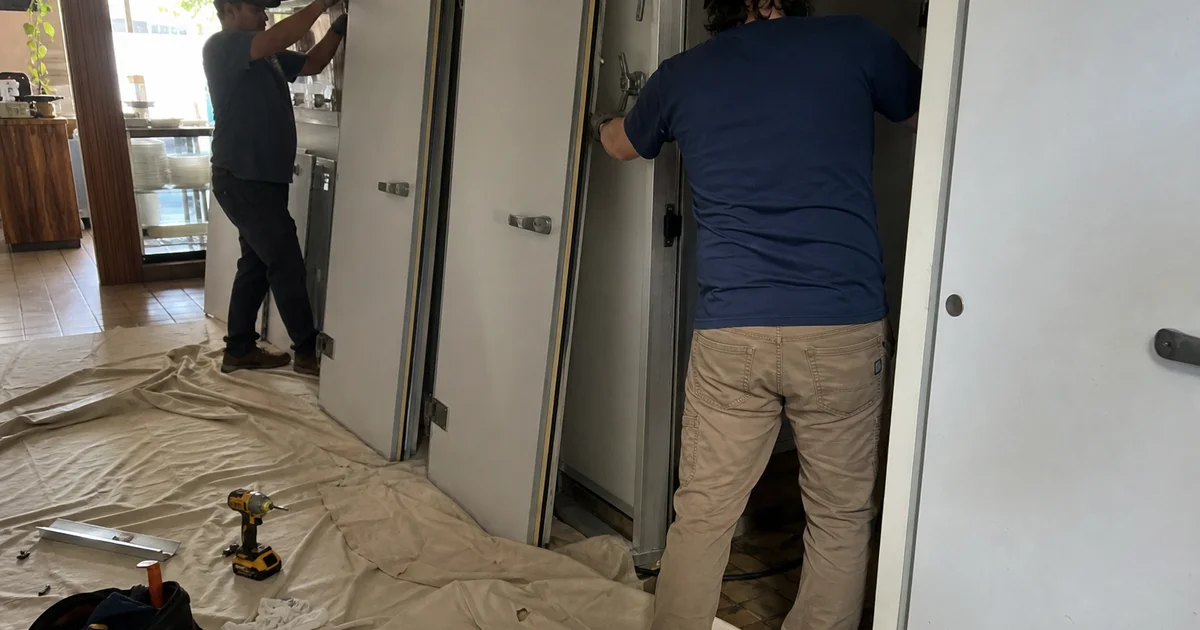
Careful dismantle. Cam-locks release from the inside with a hex key. Panels come apart in reverse order of assembly. The failure mode here is haste: forcing a panel damages the lock mechanism or the panel edge, and a damaged edge does not seal properly on reassembly.
Staging and transport. Panels stack flat and protected. Edge damage in transit is the most common way a relocation goes wrong.
Reassembly and Recommissioning
The destination has to be ready before panels arrive. Level slab, drainage sorted, electrical in place, condensing unit siting confirmed. A relocation stalls fastest when panels show up somewhere that is not prepped.
Reassembly follows the labeling in reverse, with fresh sealant at the joints and new gaskets where the old ones are tired. Panels that were fine in their original position will still leak if the joints are not re-sealed properly.
Then the refrigeration goes back: line runs, condensing unit set, evacuation, charge, and startup. Recommissioning means the same verification as a new build. Pull-down time, holding temperature under load, defrost cycle completion, and pressures checked at operating conditions.
Budget for the parts that always need replacing
Door gaskets, sweeps, sealant, and often the door closer. These are consumables that were probably tired before the move and will not improve during it. Replacing them during reassembly is cheap. Discovering they leak after everything is back together is not.
Planning the Downtime
The real question is not how long the physical work takes, it is what happens to your product in the meantime.
| Scenario | Typical approach |
|---|---|
| Same-building move, short window | Consolidate into reach-ins, reduce ordering |
| Multi-day gap | Rental refrigeration or temporary box on site |
| New address, longer window | Reduce inventory ahead, phase the move |
| Seasonal slow period available | Schedule into it, simplest option |
We plan this as part of the quote rather than leaving it as your problem. If temporary cold storage is needed, it gets scoped up front so the number you see is the number you pay.
Moving or remodeling in the Portland Metro area? Talk to our construction team with the current box dimensions, its age, and where it needs to end up.
Assessing Whether the Box Is Worth Moving
Before quoting a relocation we look at five things, and any of them can change the recommendation.
Panel faces. Dents are cosmetic. Punctures are not, because they breach the vapor barrier and let moisture into the insulation core.
Cam-lock function. Locks that no longer pull a joint tight mean the reassembled box will leak air at that seam permanently.
Insulation condition. Panels that feel unusually heavy, or that show staining at the edges, may be waterlogged. Waterlogged panels have lost R-value and will not recover.
Door and frame. A frame out of square, worn hinges, or a door that has been forced will not seal after a move any better than it does now.
Floor. If the box has an insulated floor, its condition matters as much as the walls, and damage there is often hidden under shelving.
A box that passes all five is worth moving. A box that fails two or more usually is not, and we will say so rather than quote a move that leaves you with the same problems in a new location.
Sequencing Around a Remodel
Relocations rarely happen in isolation. They are part of a remodel with other trades involved, and sequencing matters.
Flooring, drainage, and electrical at the new location all need to be complete before panels arrive. If the walk-in goes in too early, other trades work around it and risk damaging it. Too late, and the box becomes the critical path for opening.
Tell us the remodel schedule and we will slot the work where it belongs rather than at whichever end is convenient.