
Scheduled Versus On-Demand
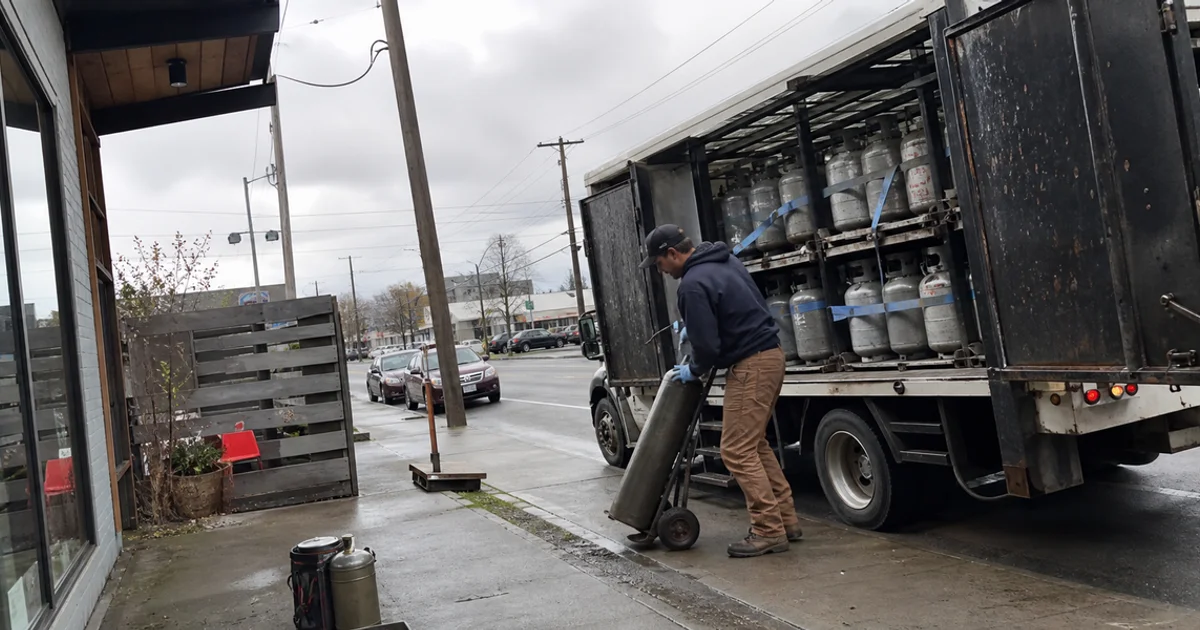
Scheduled delivery means we set a cadence based on your estimated consumption and a driver swaps cylinders on that interval whether or not anyone has thought about it. This is the right default for any operation with reasonably predictable usage.
On-demand delivery means you call when you need gas. Suitable for low or unpredictable volume, seasonal operations, and businesses where consumption genuinely varies too much to forecast.
Emergency delivery is on-demand under time pressure, usually because a cylinder ran dry mid-service. It exists, we do it, and it costs more than either of the above because it is an unplanned stop outside route timing.
Most of our commercial gas delivery accounts sit on scheduled routes for exactly the reason you would expect: it is cheaper per unit and it removes a recurring worry from the closing checklist.
How We Set Your Cadence
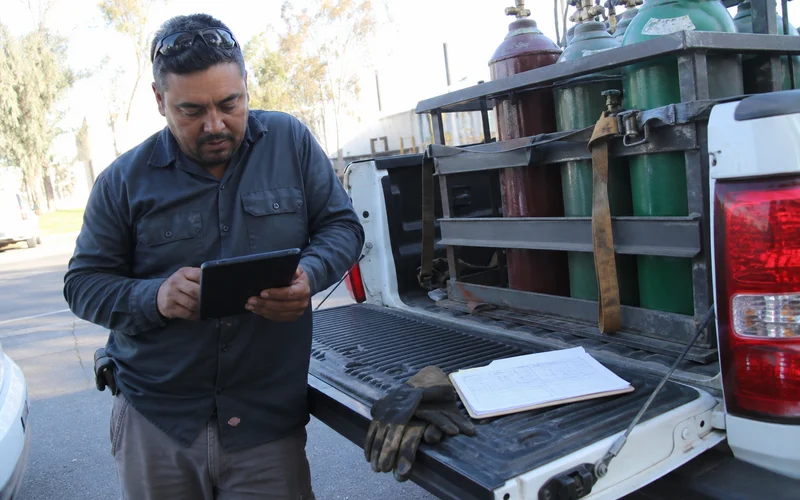
The estimate comes from usage inputs you already know.
For a bar or restaurant: kegs poured per week, fountain soda volume, and whether you run nitro. For a lab or production facility: consumption per process cycle and cycles per week. For a brewery: production volume, packaging method, and how much CO2 goes to purging versus dispensing.
From those we estimate monthly consumption and set an interval with deliberate margin, so a busy week does not empty a cylinder before the next drop. Then we adjust after a couple of cycles once real consumption data exists, because estimates are estimates.
Seasonal businesses get seasonal cadences. December in a bar is not November in a bar, and the route should reflect that rather than pretending otherwise.
What Drives Price
| Variable | Effect |
|---|---|
| Gas type and grade | Specialty and high-purity cost more than standard |
| Format | Bulk is cheaper per unit than cylinders |
| Volume | Higher volume improves per-unit rates |
| Delivery type | Scheduled beats on-demand; emergency costs most |
| Cylinder size | Larger cylinders lower cost per pound |
| Site access | Difficult access adds time to every stop |
We do not publish a rate card because a downtown bar with stair access and a suburban facility with a loading dock are not the same delivery, and pretending otherwise would just mean quoting the harder case to everyone.
The format line is usually the biggest lever, and the tradeoffs are covered in cylinder versus bulk gas delivery. The delivery-type line is the second: an unplanned stop is always the most expensive gas you will buy.
Cross-border coverage
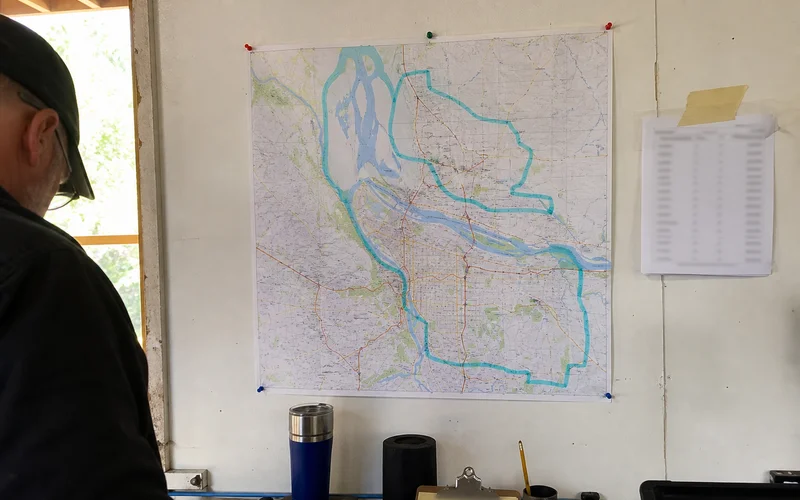
We run both the I-5 and I-205 crossings into Clark County, Washington. Vancouver, Camas, Washougal, and Battle Ground accounts get batched onto shared routes. Plenty of Oregon-side suppliers will not cross the river, which is the most common reason Washington-side operators call us.
Setting Up an Account
Setting up takes one conversation. We need your business details and delivery address, which gases and grades you use, your estimated consumption, your preferred cylinder format and size, where cylinders will be stored and how the driver reaches them, and a contact for delivery coordination.
From there we propose a cadence and terms. Payment terms for established commercial accounts are typically invoice-based, and we accept cash, check, and card as well.
If you already hold a refrigeration or glycol chiller service account with us, gas can sit on the same account. One relationship, one invoice, and occasionally one truck covering both stops, which in a district with tight loading zones is more useful than it sounds.
Ready to price it? Set up an account with your usage figures and we will size the route around them.
What Changes Your Cadence Mid-Year
A route interval set in March is not automatically right in December, and the accounts that run into trouble are usually the ones that never revisited it.
Seasonal volume. Holiday trading, summer patio season, and event schedules all move consumption significantly. Tell us ahead and we adjust rather than discovering it when a cylinder empties on a Friday.
Menu and program changes. Adding a nitro line, expanding draft, or putting in a second soda station changes consumption immediately and permanently.
Equipment changes. A new draft system with different line lengths may run at a different pressure, which changes gas use even at identical pour volume.
A leak. Sudden unexplained consumption increase is almost always a leak somewhere in the system, and the fix is finding it rather than delivering more gas. Soapy water on fittings finds most of them in ten minutes.
Multiple Sites on One Account
Operators running several locations frequently end up with a different gas arrangement at each, usually because each site set itself up independently.
Consolidating onto one account gets you consistent pricing across sites, one invoice instead of several, and route planning that treats your locations as a group. In a metro area as compact as Portland’s, that last point is a genuine efficiency rather than a talking point.
It also means one conversation when something needs to change, instead of three.
Getting Started
Send your usage figures and delivery addresses and we will propose cadence and terms. If you also hold refrigeration service with us, it goes on the same account.