
The Two Formats
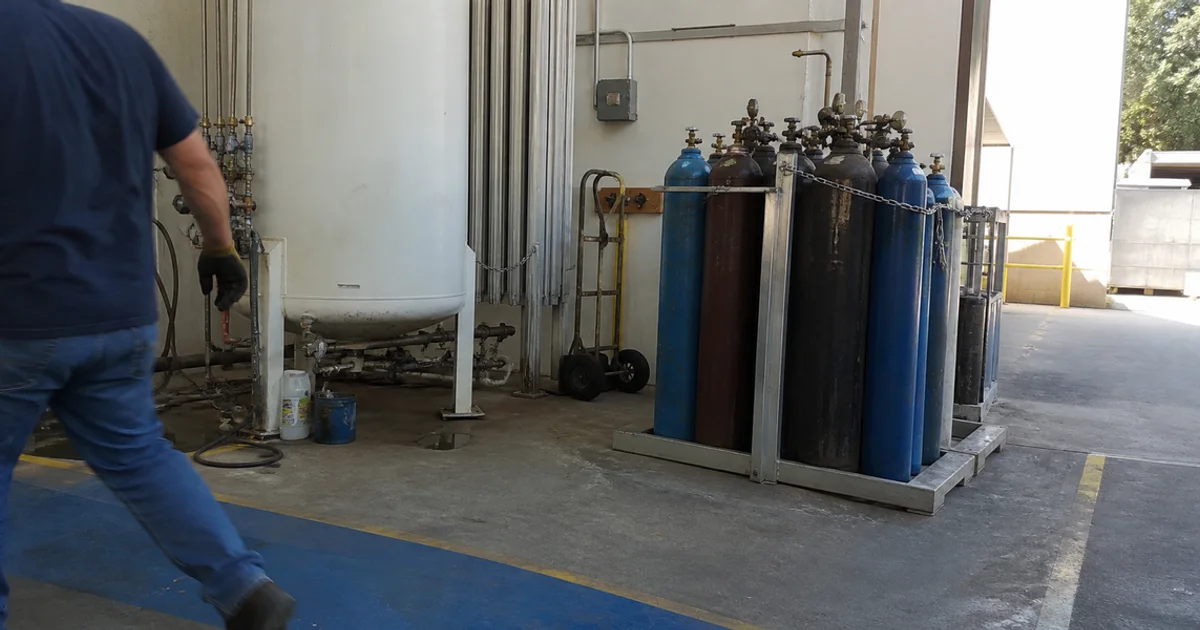
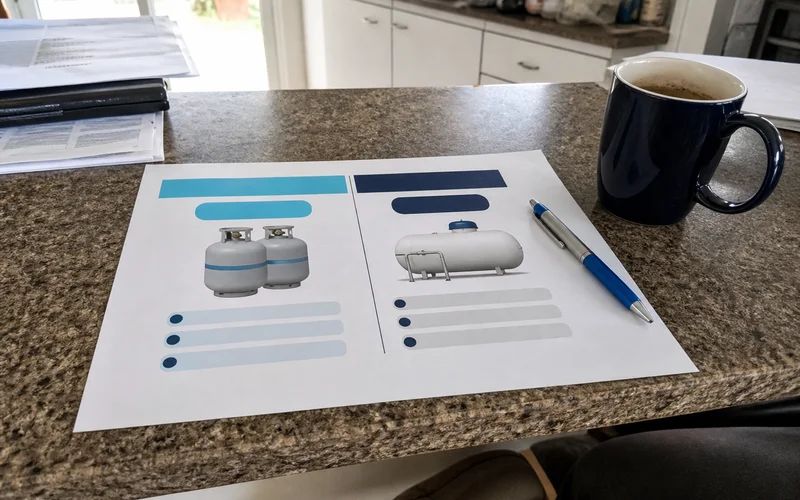
High-pressure cylinders hold compressed gas in portable steel or aluminium vessels. They are the default for most commercial accounts because they need no special siting, they scale by simply adding more, and staff already know how to handle them.
Bulk supply stores liquefied gas in an insulated vessel, commonly a dewar, holding far more gas in the same footprint. Refills happen by filling the vessel in place rather than swapping it.
Both come through our commercial gas delivery routes across the Portland Metro area. Which one fits depends on four things: volume, space, labor, and cost per unit.
Side by Side
| Factor | Cylinders | Bulk |
|---|---|---|
| Cost per unit of gas | Higher | Lower |
| Storage footprint per unit stored | Larger | Smaller |
| Siting requirements | Minimal | Space, ventilation, truck access |
| Staff handling | Regular swaps, physical | Minimal, filled in place |
| Delivery frequency | More often | Less often |
| Flexibility across gases | High, one cylinder each | Lower, usually one gas |
| Suits | Low to moderate volume | High steady volume |
| Upfront arrangement | Simple | Site assessment needed |
The Signals That You Have Outgrown Cylinders
Rather than chasing a threshold number, watch for these:
Swapping has become a chore. If a staff member spends meaningful time each week wheeling cylinders around, that labor has a cost and it recurs forever.
Storage is full of cylinders. Cylinder banks eat floor space in exactly the areas that are already tight in urban Portland buildings.
You are taking multiple deliveries a month. Each delivery has a fixed cost component. Frequency multiplies it.
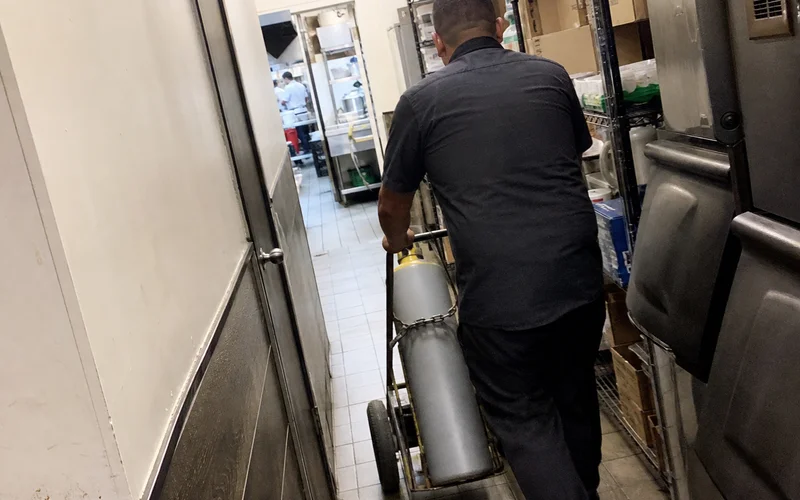
Someone has been injured or nearly injured. High-pressure cylinders are heavy and awkward. Narrow hallways and stairs make that worse.
You are running out despite a route. Consumption has outpaced the format.
Any two of those together are worth a bulk conversation.
What a site assessment actually checks
Floor space and clearance, whether the vessel can physically get to its location, ventilation, surface stability, proximity to heat and traffic, and whether the delivery truck can reach the fill point. Most bulk conversations that fail, fail on access rather than on volume.
The Hybrid That Suits a Lot of Operations
You do not have to pick one for everything. A common arrangement is bulk for your highest-volume gas and cylinders for everything else.
A large brewery might run bulk CO2 while keeping nitrogen and specialty blends on cylinders. A production facility might run bulk nitrogen while argon stays on cylinders because usage is modest. This gets you the per-unit savings where volume justifies them without forcing a bulk installation for a gas you use twice a month.
Making the Decision
Tell us what gases you use and roughly how much of each per month, then let us look at the space. Ninety percent of the analysis is volume against siting, and both are quick to establish.
If the numbers do not support bulk yet, the alternative worth optimizing is your route and cylinder size. A properly sized scheduled route with the right cylinder format removes most of the friction people associate with cylinders. Our guide on scheduling and pricing covers how that gets set up.
What Changes Operationally When You Switch
Moving to bulk is not just a supply change, it changes some daily habits.
Level monitoring replaces cylinder counting. A dewar has a gauge showing contents. Somebody needs to read it, or the fill schedule needs to be reliable enough that nobody has to.
Fills happen on site. The truck comes to you and fills the vessel in place. That means the delivery route needs vehicle access to the fill point, and somebody available to let the driver in.
Handling training changes. Staff no longer wrestle cylinders, which is a safety win, but liquefied gas has its own handling considerations and the people near it should understand them.
Redundancy looks different. With cylinders, your backup is another cylinder. With bulk, your backup is either sufficient headroom in the fill schedule or a cylinder kept on hand for emergencies. Plenty of bulk sites keep one cylinder for exactly that reason.
Running the Numbers Honestly
The per-unit saving on bulk is real and it is the headline. The full comparison includes a few things that are easy to leave out.
Vessel rental or purchase, if applicable. The floor space the vessel occupies, which has a value in a tight building. Any plumbing or regulator changes needed at changeover. And the fact that a partially full dewar represents capital sitting in your building rather than gas you have used.
At genuinely high volume those factors are small against the savings. At marginal volume they are what makes the switch not worth doing yet.
Tell us your monthly consumption by gas and we will model both formats against your actual usage rather than a generic threshold.