
What Each Gas Is Actually For
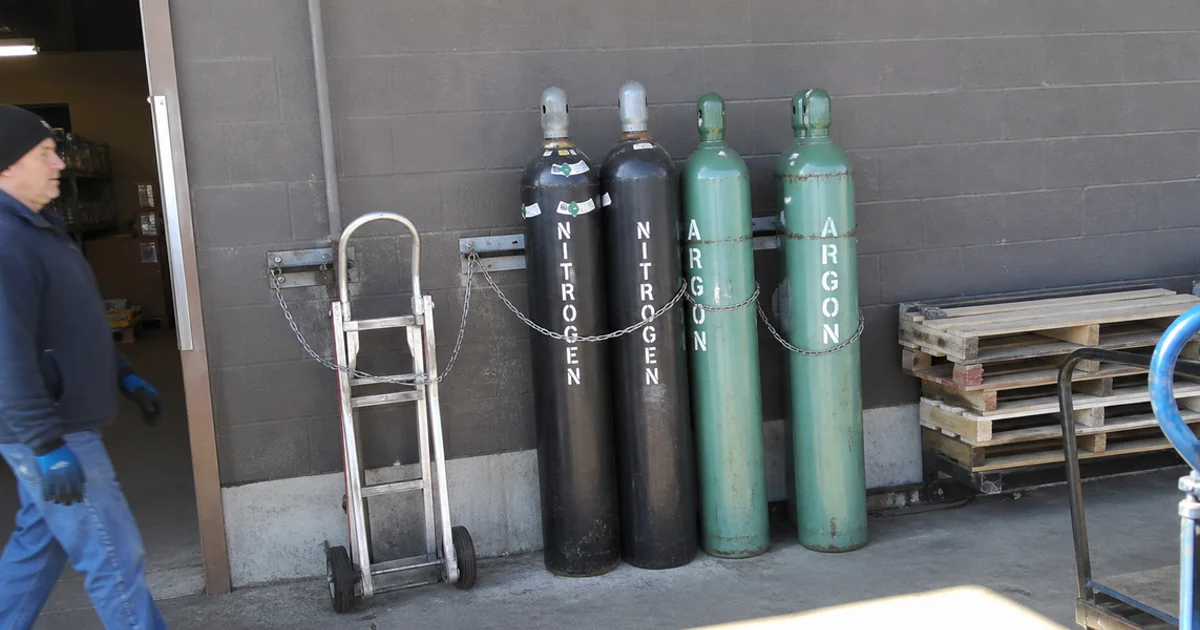
Nitrogen is inert and cheap, which makes it the workhorse of commercial and industrial gas. It displaces oxygen for food packaging and preservation, it pressurizes and purges systems, it drives nitro beverage dispensing, and in liquid form it provides deep cooling for laboratory and food applications.
Argon is inert and denser than air, which makes it valuable where you need a blanket that stays put. Welding shielding is the largest use, along with analytical instrumentation and specific laboratory processes.
Oxygen supports medical, laboratory, and industrial cutting and brazing applications. It carries the strictest handling requirements of the three because of its reactivity with oils and combustibles.
Alongside our beverage gas routes, our commercial gas delivery service supplies all three to laboratories, food producers, industrial shops, and healthcare facilities across the Portland Metro area.
Purity Grades Matter More Than People Expect
Gas purity is specified by grade, and the right grade is dictated by the application rather than by budget.
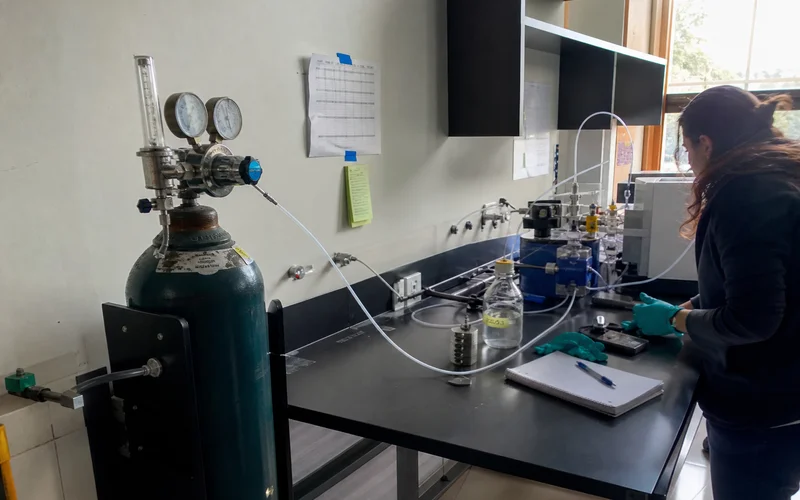
An analytical instrument calibrated on high-purity carrier gas will produce unreliable results on a lower grade, and diagnosing that is expensive because the symptom looks like an instrument fault rather than a supply problem. Food-contact applications have their own requirements. Welding shielding is more forgiving but still has a floor below which weld quality suffers.
The practical advice is simple: tell your supplier the application, not just the gas. A good supplier will specify the grade rather than asking you to.
| Application | Typical requirement |
|---|---|
| Analytical instrumentation | High purity, application specific |
| Food packaging and preservation | Food grade |
| Beverage dispensing | Food grade |
| Welding shielding | Welding grade |
| Industrial purging | Industrial grade |
| Laboratory general use | Varies by protocol |
Cylinders, Bulk, and the Crossover Point
Most commercial accounts start on high-pressure cylinders. They are portable, they need no special siting, and they scale by simply adding more.
The problems arrive with volume. Swapping cylinders becomes a recurring labor cost, storage space fills up, and cost per unit of gas is higher than bulk. At some point the arithmetic flips.
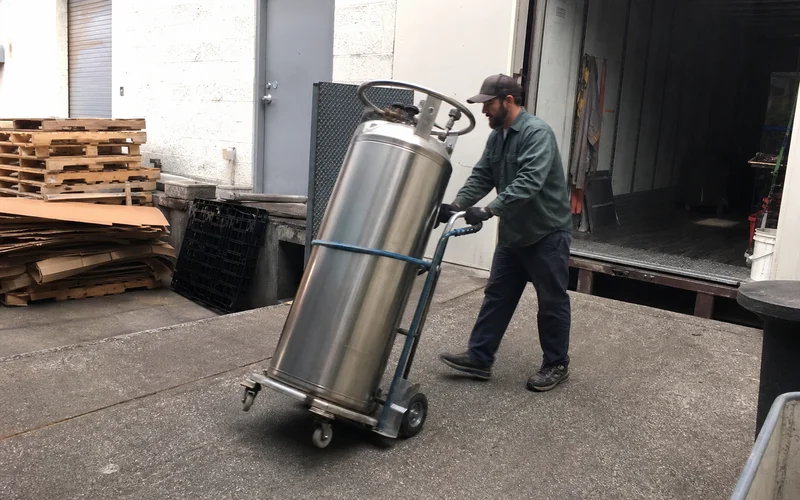
Bulk supply, usually a dewar holding liquefied gas, stores dramatically more in the same footprint and costs meaningfully less per unit. It requires proper siting, appropriate handling procedures, and space you may or may not have. Our guide on cylinder versus bulk supply works through where that threshold sits.
Handling basics that get skipped
Cylinders stay upright and secured. Valve caps go on whenever a cylinder is not connected. Full and empty cylinders get stored separately and labeled clearly. Oxygen stays away from oils, greases, and combustibles, always. None of this is complicated, and all of it prevents the kind of incident that shuts an operation down for a day.
Industries We Supply
Laboratories and research facilities, food producers and packaging operations, breweries and distilleries, welding and fabrication shops, healthcare and care facilities, and industrial and process operations across Multnomah, Washington, and Clackamas counties, plus Clark County, Washington.
If you already hold a beverage gas account with us, specialty gases can be added to the same account and delivered on the same route. That consolidation is usually the easiest efficiency available to a facility currently buying gas from two or three suppliers.
Tell us the gas, the grade, the volume, and the delivery point, and we will set up a route that keeps you supplied without anyone tracking cylinder levels.
Regulators and Fittings Are Gas-Specific
One detail that catches new accounts: you cannot move a regulator between gases freely.
Cylinder valve outlets follow CGA standards, and the connection differs by gas and pressure class deliberately. That is a safety feature, preventing an oxygen regulator from being fitted to a fuel gas cylinder or a low-pressure regulator from being attached to a high-pressure source.
It also means each gas on your site needs its own correctly specified regulator, and adapting between them with hardware-store fittings is not an acceptable workaround. If you are adding a new gas, add the right regulator with it.
Flow requirements matter too. A regulator sized for intermittent low-flow laboratory use will not hold pressure under a continuous high-flow industrial draw. Specify to the application rather than to what happens to be on the shelf.
Purity Is Also About Handling
Buying a high-purity grade does not guarantee high-purity gas at the point of use.
Contamination gets introduced downstream: through lines that were not purged, fittings that leak air inward under vacuum conditions, and regulators previously used on a different gas. Laboratories running sensitive analytical work generally know this. Food and industrial users frequently do not, and then wonder why results drifted after a supplier change that was not actually the cause.
If purity matters to your process, the delivery hardware is part of the specification, not an afterthought.
Tell us the gas, grade, volume, and application, and we will set up a route and confirm the hardware you need with it.