
What Is Actually Happening
Two things are being phased down at once, and operators frequently conflate them.
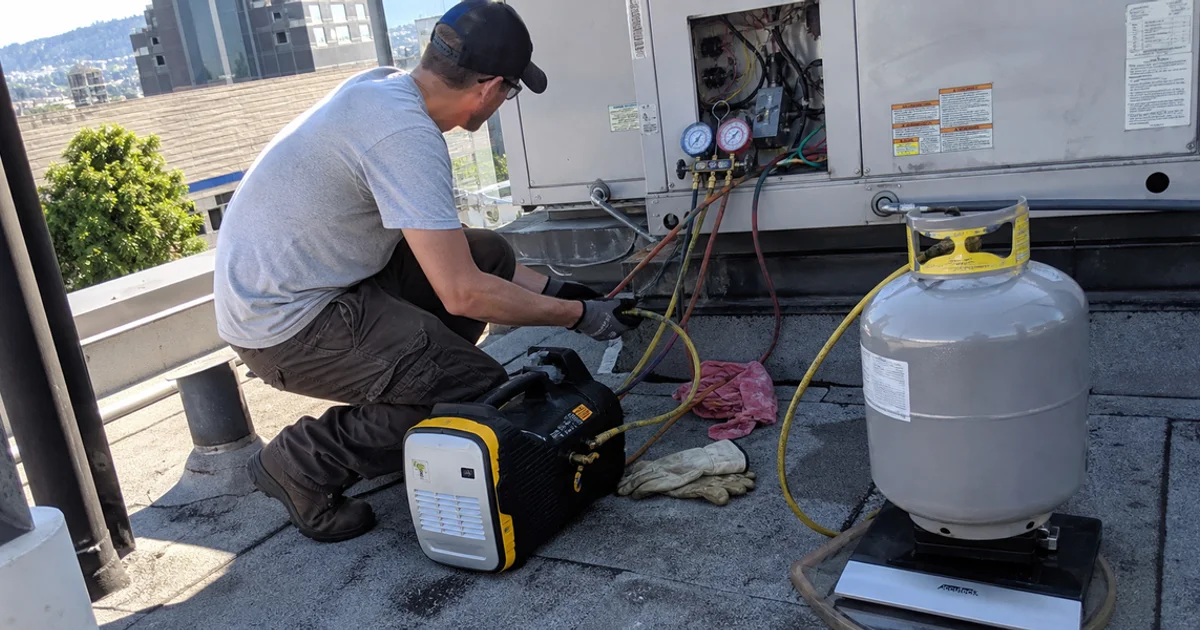
R-22 is a hydrochlorofluorocarbon that damages the ozone layer. Its production and import in the United States have been phased out. Existing equipment can keep running, but the only refrigerant available to service it is recovered and reclaimed material. Supply is finite and prices reflect that.
R-404A is a hydrofluorocarbon that does not harm ozone but carries a very high global warming potential. It is being phased down under HFC reduction programs, with production allowances stepping down over time. Same practical result: rising cost, shrinking supply.
If your commercial refrigeration runs on either one, the question is not whether this affects you. It is when, and what you do about it. Our commercial refrigeration repair technicians work through this with Portland operators regularly.
EPA Section 608 in Practical Terms
Section 608 of the Clean Air Act governs how refrigerants are handled. The parts that matter to an equipment owner:
Certified technicians only. Anyone servicing, maintaining, repairing, or disposing of equipment containing regulated refrigerant must hold Section 608 certification. This is not optional and it is not a formality.
No knowing venting. Refrigerant must be recovered, not released. Recovery equipment and proper procedure are part of any legitimate service call.
Leak repair requirements. Larger systems above certain charge thresholds carry obligations around leak rates, repair timelines, and recordkeeping. If you operate a large rack system, this applies to you and your service records matter.
Disposal. Refrigerant must be recovered before equipment is scrapped.
Oregon layers state environmental rules on top of federal requirements, including restrictions on high-GWP refrigerants in certain new equipment categories. The direction of travel is consistent across both: high-GWP refrigerants are being pushed out of new equipment, and servicing old equipment gets progressively harder.
Your Three Options
Keep running it as is. Reasonable if the system is tight, not leaking, and reasonably young. A sealed system that does not lose charge does not need refrigerant, so the supply problem is theoretical until something fails. The risk is that a leak turns into a large, expensive recharge on scarce refrigerant.
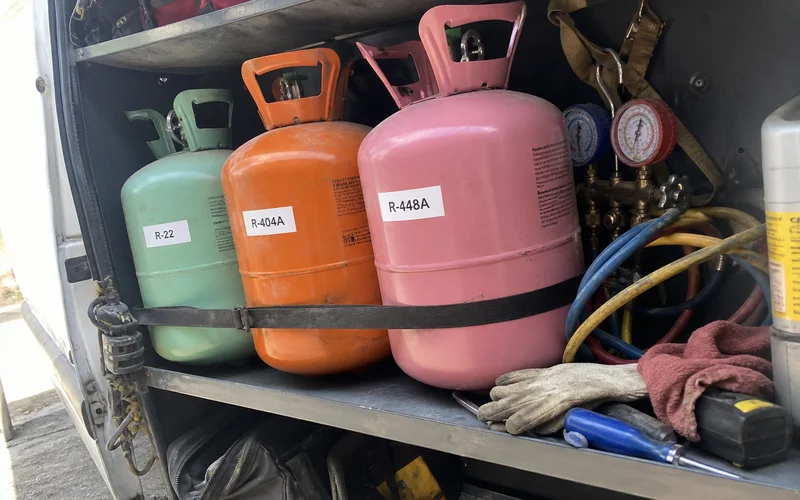
Retrofit to a lower-GWP alternative. Alternatives such as R-448A and R-449A were developed specifically as retrofit paths for existing systems. A retrofit typically involves recovering the old charge, changing oil where required, replacing components that are not compatible, and recharging. Not every system is a candidate, and performance can shift slightly, so it needs assessment rather than assumption.
Replace the equipment. On aging systems, replacement resolves the refrigerant question permanently and usually improves efficiency substantially. It also lets you choose the timing rather than reacting to a failure.
| Situation | Usually the right move |
|---|---|
| Young R-404A system, no leaks | Keep running, plan ahead |
| R-404A system, leak history, mid-life | Assess retrofit |
| R-22 system past 10 years, needs recharge | Replace or swap condensing unit |
| R-22 system, sound walk-in box | Replace refrigeration, keep the box |
| Large rack system with leak-rate obligations | Plan a staged transition |
The hidden cost of waiting
Operators who wait until a failure forces the decision pay the worst version of every price: emergency labor, peak refrigerant cost, and no time to shop equipment or schedule installation around their operation. Planning the transition on your own calendar is meaningfully cheaper.
What to Do This Month
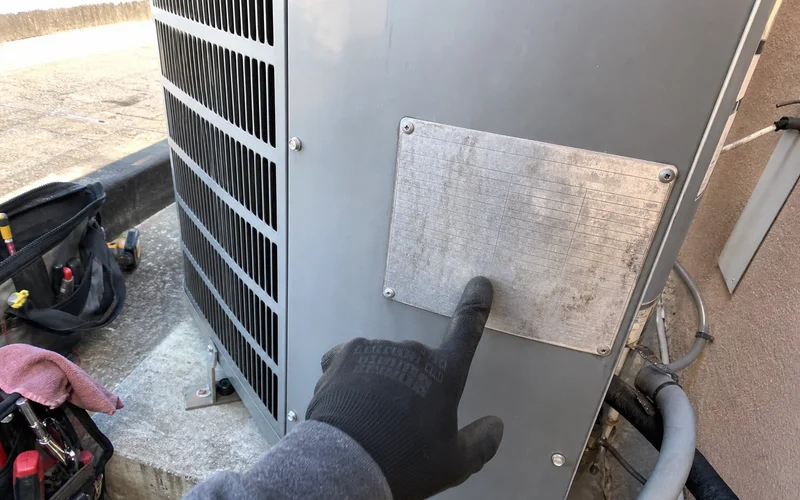
Find out what you actually have. Walk your equipment, read the data plates, and write down refrigerant type and charge weight for each unit. Most operators cannot answer this question off the top of their head, and it is the foundation of every decision that follows.
Then sort by risk. Systems with leak history and obsolete refrigerant go at the top of the list. Systems that are sealed, young, and on modern refrigerant go at the bottom.
Then get a technician’s read on the top of that list. Whether a specific unit is a retrofit candidate, what that would cost, and how it compares to replacement is a system-specific answer.
If you are weighing a large repair against a new unit more broadly, our guide on repair versus replace walks through the age, cost-ratio, and downtime factors alongside the refrigerant question.
What a Retrofit Actually Involves
Retrofitting is not a matter of draining one refrigerant and adding another, which is why it needs assessment rather than assumption.
The existing charge is recovered and reclaimed. Oil is frequently changed, because older systems often run mineral oil while many replacement refrigerants require polyol ester oil to circulate properly. Components that are not compatible with the new refrigerant, certain seals, gaskets, and sometimes the expansion device, get replaced. The system is evacuated, charged with the new refrigerant, and then tuned, because superheat and subcooling targets shift with the fluid.
Performance usually changes slightly. Capacity may be marginally different, and pressures will run differently. A well-executed retrofit accounts for that; a poorly executed one leaves a system that runs but never quite performs.
Candidacy depends on the equipment, its condition, and the specific refrigerant pairing. Some systems retrofit cleanly. Others should be replaced instead, and an honest assessment says so.
Leak Repair Obligations on Larger Systems
If you operate a larger refrigeration system above the applicable charge threshold, Section 608 brings obligations that smaller equipment does not carry.
Leak rates have to be tracked, leaks above threshold rates have to be repaired within specified timeframes, verification testing is required after repair, and records have to be kept.
Practically, that means your service records are compliance documents rather than just useful history. Grocery, cold storage, and food distribution operations running rack systems are the usual category. If that describes you and nobody is currently tracking leak rate, that is worth fixing before an inspection makes it urgent.
Send us your equipment list with refrigerant types and we will help you build the transition plan.