
Refrigeration Fails Slowly, Then All at Once
Commercial refrigeration almost never dies without warning. It degrades. The signals are there for weeks, sometimes months, and they are usually ignored because the box is still cold enough and everyone is busy.
Then a hot Saturday arrives, the system has no margin left, and you are on the phone at 9 PM. Knowing what the early signals mean is the difference between a scheduled visit and an emergency, and our commercial refrigeration repair team would rather see you for the first one.
The Seven Signals Worth Acting On
1. Temperature drift. The box used to sit at 36°F and now sits at 40°F. It is still technically fine, which is exactly why it gets ignored. Drift means the system has lost capacity somewhere: charge, airflow, metering, or seal integrity. It does not recover on its own.
2. Inconsistent holding temperatures. Readings that swing several degrees across a day, or vary depending on where in the box you measure, point to airflow problems, a failing control, or product blocking circulation.
3. Excess frost or ice. Frost on the evaporator coil, ice on the ceiling, or frost creeping around the door frame all mean moisture is getting in and defrost is not keeping up. Left alone, the coil eventually bridges over and cooling stops entirely.
4. Compressor short-cycling. A compressor that starts and stops every few minutes is not doing useful work and is wearing itself out fast. Causes range from a dirty condenser to a failing control to low charge, but the outcome is the same: shortened compressor life.
5. Rising energy bills with unchanged operations. Refrigeration is usually the largest continuous electrical load in a commercial kitchen. When bills climb without a change in volume or rates, something is running longer than it should.
6. New or louder noises. Rattles, hums, buzzing contactors, or fan noise that was not there last month. Fan motor bearings announce themselves before they seize.
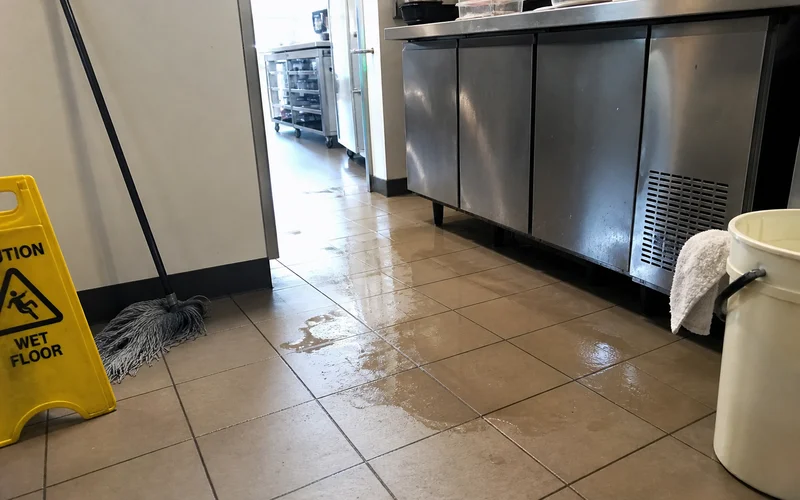
7. Water pooling. Water on the floor under a unit generally means a blocked condensate drain line or a defrost cycle producing more melt than the drain can handle. Beyond the slip hazard, standing water near refrigeration is a sanitation problem.
What Each Signal Usually Costs to Fix
| Warning sign | Common cause | Ignored, it becomes |
|---|---|---|
| Slight temperature drift | Dirty condenser, worn gasket | Full loss of holding temperature |
| Excess frost on coil | Defrost sensor or heater fault | Iced coil, no cooling at all |
| Short-cycling | Dirty condenser, control fault, low charge | Compressor replacement |
| Rising energy bills | Any of the above | Same failures, plus months of overspend |
| Water pooling | Blocked drain line | Sanitation issue and floor damage |
The pattern is consistent: the early fix is a routine visit and an inexpensive part. The late fix is after-hours labor, a major component, and often product loss.
The cheapest signal to act on
A worn door gasket costs very little to replace and takes one visit. Left alone through a Portland summer, it loads the system continuously, ices the coil, and runs the compressor into the ground. Gaskets are the highest-return maintenance item in a commercial kitchen.
Build a Habit That Catches These
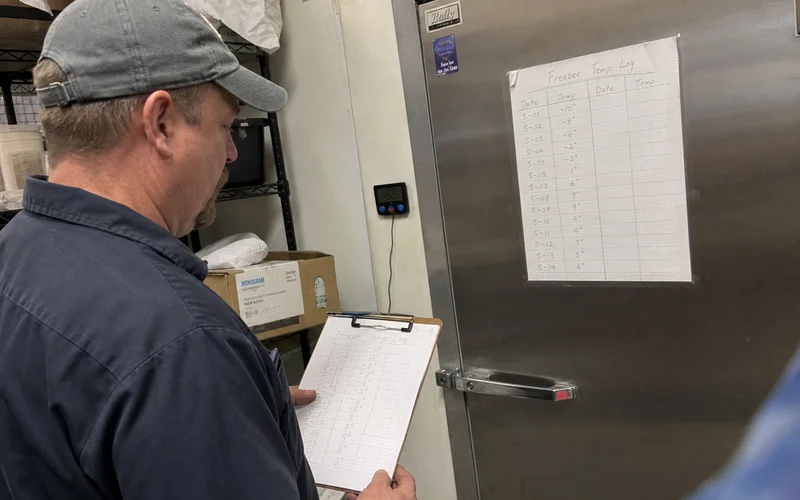
Log box temperatures twice a day and actually look at the trend, not just today’s number. Walk the condensers weekly and confirm they are clear. Check door gaskets monthly by running a hand around the seal with the door closed. Note anything that sounds different.
If that feels like more discipline than a busy kitchen can sustain, that is precisely what preventive maintenance agreements are for. A quarterly technician visit covers all of it on a schedule, documents the results for your health inspections, and catches the drift while it is still cheap.
The equipment gives you warning. The only question is whether anyone is reading it.
Signals That Are Specific to Certain Equipment
The seven general warning signs apply across the board, but some equipment gives you its own particular tells.
Ice machines announce trouble through the ice before the machine. Cloudy or soft cubes, falling bin levels, or ice that melts unusually fast almost always mean scale on the evaporator grid, which is a water treatment problem rather than a refrigeration one.
Reach-ins and prep tables show door problems first because they get opened constantly. Condensation on the exterior, frost around the door frame, or a door that no longer self-closes are all early.
Display refrigeration reveals itself through product appearance. Merchandisers that fog, or product that looks tired sooner than it should, are usually holding a few degrees warm.
Glycol systems drift at the tank rather than at the chiller, and the pattern of which tanks drift is the most useful diagnostic information available.
Rooftop condensing units hide their problems because nobody goes up there. Scheduling a look at them is worth doing precisely because no one is going to notice a fouled condenser from the kitchen.
Turning Observations Into Action
The gap between noticing something and doing something is where most emergencies are born.
Write it down when you notice it, with the date. A note saying the walk-in has been reading 40°F since the second week of the month is far more useful to a technician than a recollection that it has seemed warm lately.
Then set a threshold in advance for what triggers a call, rather than deciding in the moment when everyone is busy. Anything above safe holding range, any iced coil, and any new noise are reasonable defaults.