
The First Five Minutes
An alarm means the system has already lost the argument. Your job in the first five minutes is not diagnosis, it is containment.
Do not open the door to look. That instinct is understandable and it costs you. Every open cycle dumps cold air and pulls in humidity.
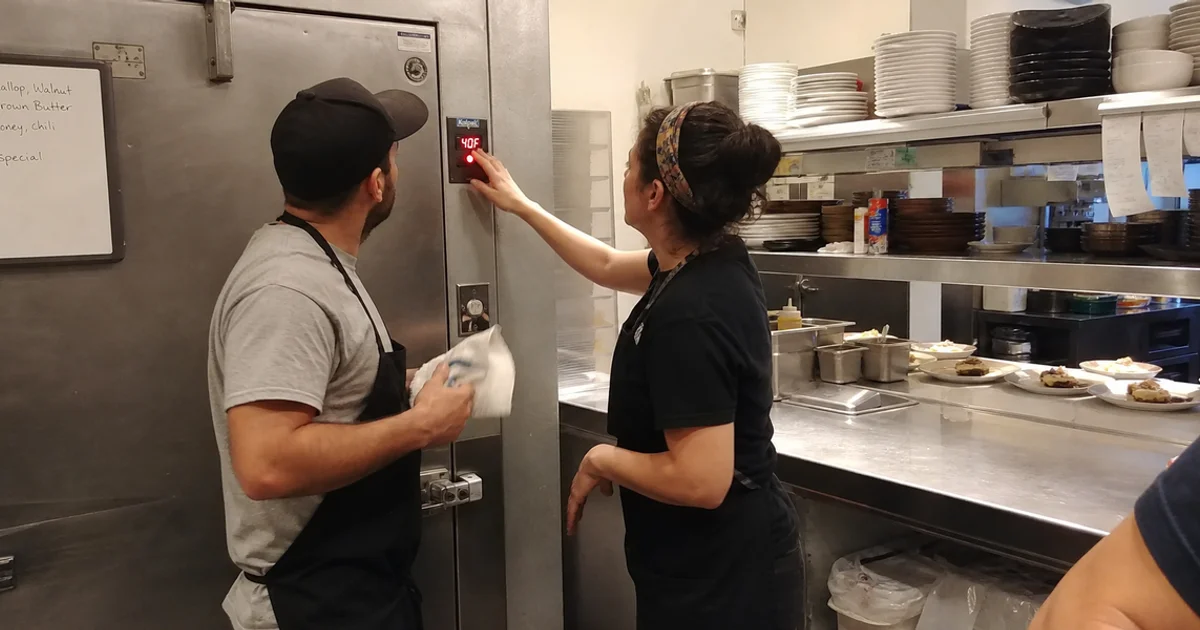
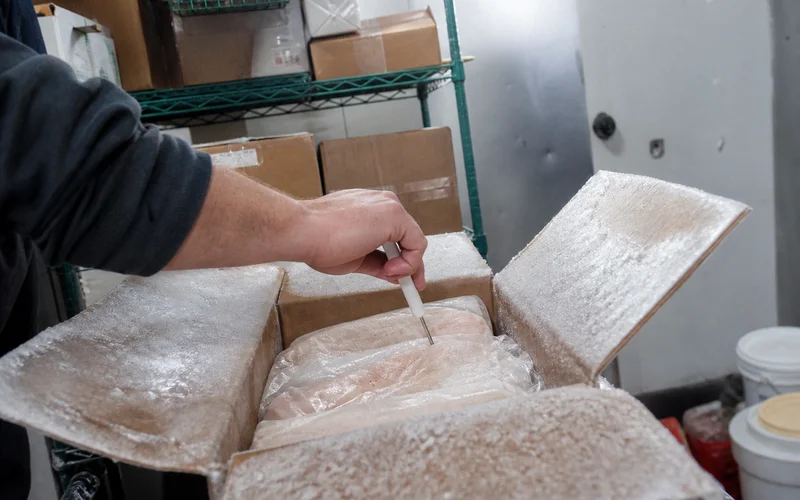
Read the actual temperature and write it down with the time. Air temperature on the controller, and if you can get one in without a long door-open, a probe reading in the product.
Confirm the door is closed and latched. A door left ajar overnight or a failed closer is one of the most common causes of a freezer alarm, and it is the one you can fix yourself in ten seconds.
Look at the condenser. If it is visibly blocked with grease and lint, you have found a large part of the problem.
Then decide whether this is recovering or not.
Is It Recovering?
Take a second temperature reading fifteen minutes after the first. If the number is falling, the system is working through a recoverable event, likely a large warm load or an extended door-open during a delivery. Keep watching, and book a service call for the near term anyway, because an alarm means margin is gone.
If the number is flat or rising, the system is not recovering. Call emergency refrigeration repair now rather than at the next reading. In Portland our dispatch line runs 24/7 for exactly this, and the phone call costs you nothing while the delay costs product.
Protect the Inventory
Once you have made the call, put someone on product.
Consolidate the highest-value and most temperature-sensitive items into a working freezer first. If you do not have one with capacity, coolers packed with ice buy hours. If you have a neighboring business with freezer space, this is what those relationships are for, and most operators in Portland’s restaurant districts will say yes.
A packed freezer holds temperature substantially longer than an empty one, because the frozen mass itself is thermal ballast. That means consolidating helps twice: it protects what you moved and slows the decline of what stayed.
Keep the door shut between trips, and plan each trip before you open it.
Document Everything
This part gets skipped and it matters more than most operators realize.
| Record | Why it matters |
|---|---|
| Time the alarm triggered | Establishes the start of the exposure window |
| Temperature readings with timestamps | Supports a defensible keep-or-discard decision |
| Product temperatures, not just air | Food safety judgments run on product |
| What was moved and when | Shows the response was reasonable |
| Time the technician arrived and the fix | Closes the record |
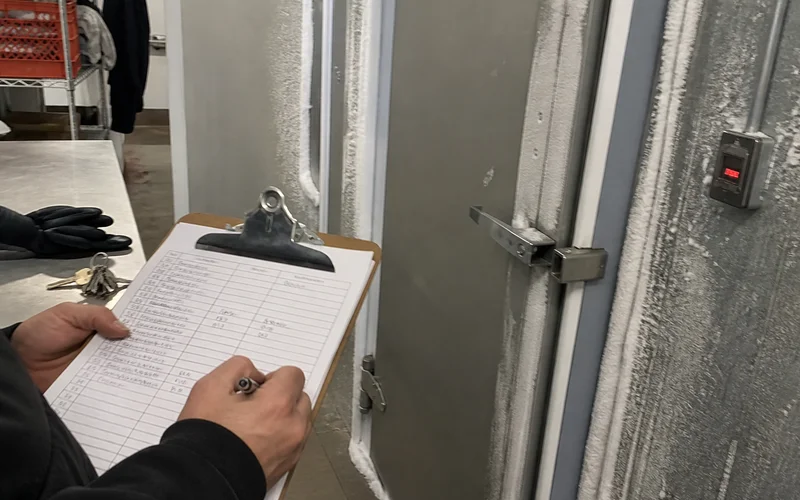
If a health inspector or an insurance adjuster later asks what happened, a timestamped log is the difference between a documented incident and a guess. Keep it with your regular temperature records.
The two-hour rule
Product held above 40°F for more than two hours is at risk. Below that threshold, partially thawed frozen product can generally be refrozen with quality loss but not safety risk. Your log is what tells you which situation you are actually in.
After the Repair
Once the system is fixed and pulling down, do not just move on. Ask the technician what caused the alarm and whether it was preventable. A drifted defrost termination sensor, a worn door gasket, or a condenser that had not been cleaned in a year are all things a quarterly maintenance visit catches while they are cheap, which is the case preventive maintenance agreements for commercial kitchens makes in detail.
The other worthwhile investment is monitoring. A wireless temperature probe with a phone alert flags drift hours before an alarm panel does, which usually means the fix happens during business hours instead of during service. For a freezer holding several thousand dollars of inventory, that pays for itself the first time it works.
Preventing the Next One
Once the immediate crisis is resolved, three changes materially reduce the odds of a repeat.
Temperature monitoring with alerting. A wireless probe that sends a phone alert on drift will flag a developing problem hours before a panel alarm does, usually during business hours when a technician is easy to get and product is not yet at risk. For a freezer holding significant inventory, this is the highest-value change available.
Door discipline. Confirm the door latches fully at every close, and repair or replace a failing closer immediately rather than propping the habit up with a note. A freezer door left ajar overnight is one of the most common causes of a morning alarm.
Quarterly maintenance. Condenser cleaning, gasket inspection, and defrost cycle verification catch the slow failures that produce alarms. A drifted defrost termination sensor is a fifteen-minute correction during a scheduled visit and a Saturday night emergency if nobody looks.
Write the Protocol Down Before You Need It
The worst time to work out who does what is during the alarm.
A single laminated card near the freezer covering the first steps, the emergency number, where the probe thermometer lives, which units product transfers into, and where the log sheet is kept converts a scramble into a procedure. Whoever is on shift can follow it without waiting for a manager to arrive.
That takes twenty minutes to prepare and it is the difference between a controlled response and an expensive one.